Germany is becoming a top study destination for Indian students, ranking 7th for providing high-quality education and curriculum. Indian students are increasingly inclined to study in Germany, with statistics showing that 69,816 Indian students were enrolled in German universities in 2025/26, marking a 17.5% annual increase and making India the largest source country of international students in Germany.
Around 73% of Indian students pursued STEM-related programmes in 2023/24, reflecting strong interest in engineering, technology and research. Germany offers Indian students an attractive combination of affordable education and international career opportunities.
Why Study Abroad in Germany?
Indian students planning to study abroad in 2027 should stay about the advantages Germany offers to international students. Read below why as an Indian student you should consider studying in Germany.
Affordable Education
Many public universities offer tuition-free bachelor's and consecutive master’s programmes, although exceptions and semester contributions apply.
Globally Recognised Universities
Germany is home to respected institutions known for research, engineering, science and innovation.
English-Taught Programmes
International students can find English-medium courses, particularly at postgraduate level.
Industry Exposure
Universities often collaborate with companies and research organisations, creating opportunities for practical learning.
Scholarship Opportunities
Organisations such as DAAD and various foundations offer funding for eligible international students.
Post-Study Opportunities
Graduates may qualify for a residence permit to search for suitable employment after completing their studies.
Best Universities in Germany for International Students
Germany offers a wide range of universities for international students, including institutions recognised for their contributions to engineering, technology and scientific research.
Best Courses to Study in Germany
Germany offers courses that cater to different academic interests and career ambitions. Engineering and technology remain popular choices, while business, healthcare and sustainability-related programmes also attract international students.
| Bachelors in Computer Science in Germany | Hotel Management Courses in Germany |
| Bachelors in IT in Germany | Bachelors in Tourism Management in Germany |
| Bachelors in Data Science in Germany | Bachelors in Psychology in Germany |
| Bachelors in Artificial Intelligence in Germany | Bachelors in Sociology in Germany |
| Bachelors in Cybersecurity in Germany | Bachelors in International Relations in Germany |
| Bachelors in Software Engineering in Germany | Bachelors in Political Science in Germany |
| Bachelors in Information Systems in Germany | Law Courses in Germany for Indian Students |
| Bachelors in Data Analytics in Germany | Bachelors in Criminology in Germany |
| Bachelors in Business Analytics in Germany | Bachelors in Journalism in Germany |
| Bachelors in Computer Engineering in Germany | Bachelors in Media and Communication in Germany |
| Bachelors in Mechanical Engineering in Germany | Bachelors in Graphic Design in Germany |
| Bachelors in Civil Engineering in Germany | Bachelors in Architecture in Germany |
| Bachelors in Electrical Engineering in Germany | Bachelors in Interior Design in Germany |
| Bachelors in Electronics Engineering in Germany | Bachelors in Fine Arts in Germany |
| Bachelors in Automotive Engineering in Germany | Bachelors in Animation in Germany |
| Bachelors in Aerospace Engineering in Germany | Bachelors in Biotechnology in Germany |
| Bachelors in Chemical Engineering in Germany | Bachelors in Biology in Germany |
| Bachelors in Biomedical Engineering in Germany | Bachelors in Biochemistry in Germany |
| Bachelors in Mechatronics in Germany | Bachelors in Chemistry in Germany |
| Bachelors in Industrial Engineering in Germany | Bachelors in Physics in Germany |
| Bachelors in Environmental Engineering in Germany | Bachelors in Mathematics in Germany |
| Bachelors in Renewable Energy Engineering in Germany | Bachelors in Environmental Science in Germany |
| Bachelors in Engineering Management in Germany | Bachelors in Food Science in Germany |
| BBA in Germany for Indian Students | Bachelors in Agriculture in Germany |
| Bachelors in Business Management in Germany | Bachelors in Forestry in Germany |
| Bachelors in International Business in Germany | Bachelors in Nutrition in Germany |
| Bachelors in Finance in Germany | Medicine in Germany for Indian Students |
| Bachelors in Accounting in Germany | Dentistry in Germany for Indian Students |
| Bachelors in Economics in Germany | Pharmacy Courses in Germany for Indian Students |
| Bachelors in Marketing in Germany | Bachelors in Nursing in Germany |
| Bachelors in Digital Marketing in Germany | Bachelors in Public Health in Germany |
| Bachelors in Business Analytics in Germany | Physiotherapy Courses in Germany for Indian Students |
| Bachelors in HR Management in Germany | Veterinary Courses in Germany for Indian Students |
| Bachelors in Supply Chain Management in Germany | Bachelors in Health Sciences in Germany |
| Bachelors in Logistics in Germany | Bachelors in Education in Germany |
| Bachelors in Entrepreneurship in Germany | Bachelors in Social Work in Germany |
| Bachelors in Hospitality Management in Germany | Sports Science Courses in Germany |
| Masters in Computer Science in Germany | Masters in Logistics Management in Germany |
| Masters in Data Science in Germany | Masters in Project Management in Germany |
| Masters in Artificial Intelligence in Germany | Masters in FinTech in Germany |
| Masters in IT in Germany | Masters in Economics in Germany |
| Masters in Cybersecurity in Germany | Masters in Banking and Finance in Germany |
| Masters in Data Analytics in Germany | Masters in International Relations in Germany |
| Masters in Business Analytics in Germany | Masters in Psychology in Germany |
| Masters in Machine Learning in Germany | MSW in Germany for Indian Students |
| Masters in Software Engineering in Germany | Masters in Public Policy in Germany |
| Masters in Computer Engineering in Germany | MPA in Germany for Indian Students |
| Masters in Information Systems in Germany | LLM in Germany for Indian Students |
| Masters in Cloud Computing in Germany | Masters in Criminology in Germany |
| Masters in Robotics in Germany | Masters in Journalism in Germany |
| Masters in Embedded Systems in Germany | Masters in Media and Communication in Germany |
| Masters in Engineering in Germany | Masters in Architecture in Germany |
| Masters in Mechanical Engineering in Germany | Masters in Urban Planning in Germany |
| Masters in Automotive Engineering in Germany | Masters in Graphic Design in Germany |
| Masters in Civil Engineering in Germany | Masters in Animation in Germany |
| Masters in Electrical Engineering in Germany | Masters in Biotechnology in Germany |
| Masters in Electronics Engineering in Germany | Masters in Biomedical Sciences in Germany |
| Masters in Aerospace Engineering in Germany | Masters in Biochemistry in Germany |
| Masters in Chemical Engineering in Germany | Masters in Chemistry in Germany |
| Masters in Biomedical Engineering in Germany | Masters in Physics in Germany |
| Masters in Mechatronics in Germany | Masters in Mathematics in Germany |
| Masters in Industrial Engineering in Germany | Masters in Environmental Science in Germany |
| Masters in Environmental Engineering in Germany | Masters in Sustainability in Germany |
| Masters in Renewable Energy in Germany | Masters in Food Science in Germany |
| Masters in Engineering Management in Germany | Masters in Agriculture in Germany |
| Masters in Production Engineering in Germany | Masters in Forestry in Germany |
| Masters in Automotive Management in Germany | Masters in Nutrition in Germany |
| MBA in Germany for Indian Students | Masters in Public Health in Germany |
| Masters in Management in Germany | Masters in Healthcare Management in Germany |
| Masters in Finance in Germany | Masters in Nursing in Germany |
| Masters in Accounting in Germany | Masters in Pharmacy in Germany |
| Masters in International Business in Germany | Masters in Health Sciences in Germany |
| Masters in Marketing in Germany | Masters in Education in Germany |
| Masters in Digital Marketing in Germany | Masters in Teaching in Germany |
| Masters in Business Analytics in Germany | Masters in Hospitality Management in Germany |
| Masters in HR Management in Germany | Masters in Tourism Management in Germany |
| Masters in Supply Chain Management in Germany | Masters in German Studies in Germany |
Study in Germany fees for Indian Students
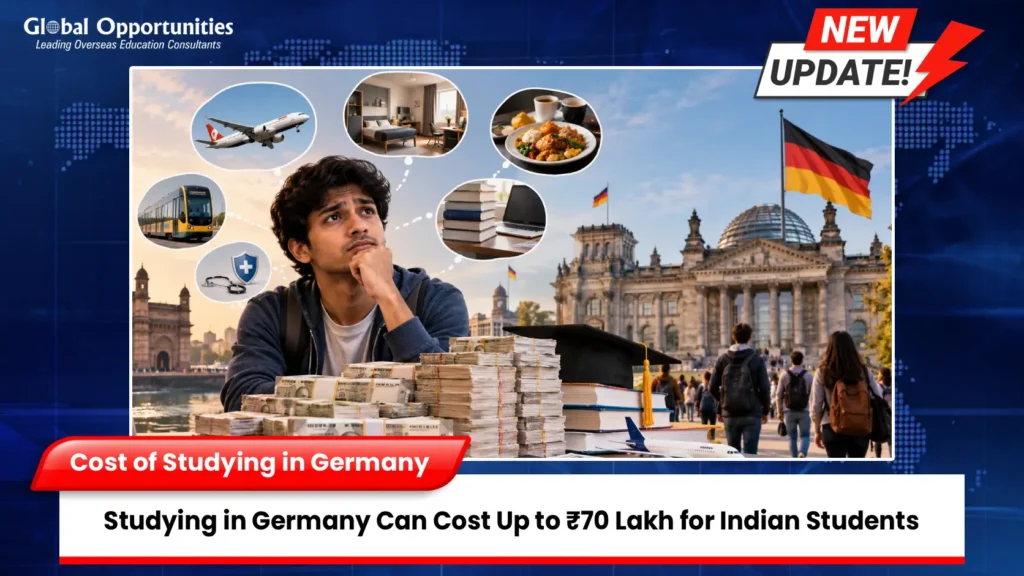
The cost to study in Germany depends on the university, course and city. While many public institutions charge no tuition for eligible programmes, students still need to budget for semester contributions, accommodation, health insurance and everyday living expenses.
The cost of studying is an important factor for Indian students planning to study in Germany. The expenses vary depending on the university, course and mode. Comparing tuition fees, living expenses and available scholarships can help students choose a university that suits their budget.
Expense | Indicative Cost |
Public University Tuition | Often €0 for eligible programmes |
Semester Contribution | €70–€430 per semester |
Baden-Württemberg Public University Tuition for Non-EU Students | Generally €1,500 per semester, subject to exemptions |
Selected Bavarian University Tuition | University- and programme-specific |
Private University Tuition | Varies considerably by institution and programme |
Books and Study Materials | Depends on course requirements |
The cost of living in Germany depends on the city, accommodation type and personal lifestyle. Indian students planning to study in Germany should budget for rent, groceries, transportation, health insurance and other daily expenses.
Expense Category | Average Monthly Cost (€) |
Accommodation and Utilities | €410 |
Food and Groceries | €198 |
Health Insurance and Medical Expenses | €100 |
Transportation | €89 |
Clothing | €46 |
Study Materials | €67 |
Internet and Communication | €31 |
Leisure and Entertainment | €65 |
Other Personal Expenses | €114 |
Total Estimated Monthly Cost | €1,120 |
Germany Scholarships for Indian students
Scholarships can help Indian students manage education and living expenses while pursuing higher studies in Germany. Funding availability depends on the academic programme, qualifications and scholarship provider.
DAAD Scholarships: Support eligible international students, particularly for selected postgraduate, doctoral and research programmes.
Deutschlandstipendium: A merit-based scholarship programme offered through participating universities, generally providing €300 per month.
Erasmus+ Scholarships: Funding opportunities for eligible study and exchange programmes, including selected joint master’s degrees.
Heinrich Böll Foundation Scholarships: Support for applicants meeting the foundation’s academic and selection criteria.
Friedrich Ebert Foundation Scholarships: Funding for eligible students who meet academic, social engagement and other requirements.
University-Specific Scholarships: Some universities offer their own merit-based, research or financial assistance schemes.
Germany Intake 2027
Germany primarily offers two intakes: the Summer Intake (March/April) and the Winter Intake (September/October). The table below highlights important admission and application periods for Indian students planning to study in Germany in 2027.
Winter Intake (September/October 2027)
The main intake in Germany, offering the widest range of courses and university options. Application deadlines often fall between May and July, but vary by university and programme.
Summer Intake (March/April 2027)
A smaller intake with fewer courses available, particularly at the bachelor’s level. Applications commonly close between November and January.
Application Deadlines: Many universities set deadlines around 15 January for summer intake and 15 July for winter intake, but deadlines vary by institution, course and applicant category. Check the official programme page before applying.
Eligibility Criteria to Study Abroad in the Germany
Students planning to study abroad in Germany must meet academic and language requirements set by their chosen university. Eligibility depends on the qualification, programme and educational background. Indian applicants may also need an APS certificate to verify their academic documents.
- Academic Qualification: Complete Class 12 from a recognised board with the required subjects and marks. For Indian applicants, eligibility depends on the qualification pathway and the latest recognition criteria.
- Minimum Marks: From Winter Semester 2026/27, the updated criteria specify at least 70% in Class 12 for the relevant Indian qualification pathways.
- Study Pathway: Depending on your qualifications, you may need to complete a relevant academic year at a recognised Indian university or attend a Studienkolleg and pass the Feststellungsprüfung.
- Language Proficiency: Demonstrate German proficiency for German-taught courses or English proficiency for English-taught programmes, according to university requirements.
- APS Certificate: Indian applicants generally need an APS certificate to verify their academic documents, subject to applicable exemptions.
- Additional Requirements: Submit academic transcripts, a valid passport and any programme-specific entrance test scores or documents required by the university.
- Academic Qualification: Hold a recognised bachelor’s degree in a relevant or closely related field from an accredited university.
- Minimum Marks: Meet the university’s minimum GPA or percentage requirement. The required score varies by institution and programme.
- Relevant Background: Have the prerequisite subjects, academic credits or coursework specified for your chosen master’s programme.
- Language Proficiency: Provide IELTS, TOEFL or another accepted English-language qualification for English-taught courses, or an accepted German-language certificate for German-taught courses.
- APS Certificate: Indian graduates generally need APS verification, subject to applicable exemptions.
- Additional Requirements: Depending on the course, submit a statement of purpose, CV, letters of recommendation, GRE/GMAT scores, work experience proof or other required documents.
- Degree Duration: A three-year bachelor’s degree may not meet every university’s requirements. Check degree equivalency and eligibility with the university before applying.
Study in Germany: Application Process
Indian students planning to study in Germany should begin by selecting a suitable university and course based on their academic qualifications and career goals. The application process involves checking eligibility, preparing academic documents, meeting language requirements and submitting applications before university deadlines. Check the full process below:
1. Choose Your Programme
Shortlist courses based on academic interests, eligibility and career goals.
2. Research Universities
Compare teaching language, tuition fees, locations and admission requirements.
3. Check Academic Eligibility
Confirm whether your Indian qualifications meet the programme’s entry criteria.
4. Prepare Language Evidence
Take an accepted English or German language examination where required.
5. Apply For Aps Verification
Complete the relevant APS process unless an exemption applies.
6. Submit University Applications
Apply through the university portal, uni-assist or another specified application system.
7. Review Your Admission Offer
Check any conditions and complete the university’s acceptance or enrolment process.
8. Arrange Financial Evidence
Prepare the required blocked account, scholarship documentation or other acceptable funding proof.
9. Apply For A Student Visa
Submit the required documents through the applicable German visa process.
8. Prepare For Departure
Arrange accommodation, insurance, travel and enrolment formalities.
Germany Student Visa Requirements
Indian students generally need a German national visa for long-term university studies. The application involves demonstrating admission eligibility, sufficient financial resources and the required academic and personal documentation. Read below the complete list:
- Valid Passport: Passport meeting German national visa requirements.
- Visa Application: Completed visa application form and required declarations.
- University Admission: Admission letter or other qualifying university documentation.
- APS Certificate: Generally required for Indian academic qualifications, subject to exemptions.
- Academic Documents: Relevant educational certificates, mark sheets and qualifications.
- Language Proficiency: Recognised English or German language proficiency evidence, as applicable to the course and visa.
- Financial Evidence: Proof of sufficient funds through a blocked account, qualifying scholarship or acceptable sponsorship.
- Blocked Account Amount: €11,904 for 2026; the applicable amount for 2027 should be verified.
- Health Insurance: Valid health insurance covering the required period.
- CV and Supporting Documents: Updated CV and additional documents specified in the current visa checklist.
Job Opportunities after Study in Germany
Completing a degree can open career pathways across Germany’s technology, engineering, research, healthcare and business sectors. Students who study in Germany can also gain professional exposure through internships and part-time employment, although finding a graduate job depends on skills, language ability and market demand.
| Part-time job role | Average annual earnings (INR) |
| Retail Assistant / Cashier | ₹6–8 lakh |
| Waiter / Restaurant Staff | ₹6–9 lakh |
| Food Delivery Rider | ₹6–9 lakh |
| Warehouse Assistant | ₹6–9 lakh |
| Student Research Assistant | ₹7–11 lakh |
| University Library Assistant | ₹6–9 lakh |
| Private Tutor | ₹7–12 lakh |
| Customer Support Assistant | ₹7–10 lakh |
| IT Support Assistant | ₹8–13 lakh |
| Working Student in Software Development | ₹9–15 lakh |
| Full-time job role | Average annual salary (INR) |
| Software Developer | ₹55–85 lakh |
| Data Analyst | ₹45–65 lakh |
| Data Scientist | ₹55–80 lakh |
| AI and Machine Learning Engineer | ₹60–90 lakh |
| Mechanical Engineer | ₹45–65 lakh |
| Electrical Engineer | ₹48–70 lakh |
| Civil Engineer | ₹40–60 lakh |
| Cybersecurity Analyst | ₹50–75 lakh |
| Business Analyst | ₹45–70 lakh |
| Financial Analyst | ₹50–75 lakh |
| Project Manager | ₹60–90 lakh |
| Supply Chain Manager | ₹50–75 lakh |
| Research Scientist | ₹45–70 lakh |
| Registered Nurse | ₹35–50 lakh |
| Marketing Specialist | ₹40–60 lakh |
Services offered by Global Opportunities
Global Opportunities supports students through different stages of their international education journey, helping them make informed decisions and prepare for university applications.
Free Counselling
Counselling based on your academic background, future plans, goals and preferred education pathway.
Country-Specific Experts
Connect with counsellors who understand
the admission processes, requirements and study options of specific countries.
Direct University Tie-Ups
Access study opportunities through Global Opportunities’ direct partnerships with universities and institutions across destinations.
Education Loan Assistance
Explore education loan options and understand the funding requirements for studying abroad.
University & Course Selection
We assist you in university applications and preparing all documents necessary for applying.
Scholarship guidance
We help in scholarships from universities and outside, making you understand eligibility requirements, application process & deadlines.
Student Visa Assistance
We provide needed information concerning the visa application process and submission for the selected educational institution.
Visa Interview Preparation
We will make sure that you have the required skills for getting a visa in the form of explanations of complex issues during visa interviews.
Test preparation
We will provide you with the needed information regarding taking admission exams and English tests.
Pre-Departure Assistance
Prepare for your overseas journey with some tips concerning important paperwork and travel arrangements.
Accommodation Guidance
We will help you explore suitable accommodation options based on your budget, location preferences, and convenience.
SOP and LOR Preparation
Providing guidance to candidates with precise details on how to prepare important documents like SOP and LOR.
Why Choose Global Opportunities to Study Abroad in Germany?
Choosing a university overseas can involve decisions about academic eligibility, finances, documentation and future opportunities. But with Global Opportunities, you will be navigated through these hurdles with structured guidance.
Over Two Decades of Expertise: Take advantage of more than 25+ years of experience in providing guidance to students who intend to study abroad.
A Network of Universities: Explore study possibilities through Global Opportunities’ network of 700+ universities and institutions across multiple international study destinations.
Individualised Guidance: Get counselling as per your academic background, career objectives, finances, and the destination country chosen.
State-Based Guides: Get personalised guidance from the team at your nearest branch and at the same time benefit from the company’s network throughout the country.
Comprehensive Assistance: Enjoy professional help in areas such as counselling, submitting applications to universities abroad, getting scholarships, getting a visa, and in terms of preparing for the trip abroad.
Help for Students: Take your decisions regarding an overseas education based on the guidance provided related to your academic background.
Top Countries to Study Abroad for Indian Students
Students comparing international destinations may find it helpful to examine education systems, course options and total study costs before making a decision.
Accreditation

Read Why Students Choose Global Opportunities
Read genuine reviews from students who were connected with the Global Opportunities and learn about their experience of researching universities, preparing applications and planning their next academic step.
Aafiya
Sahaj Ghumman
Vansh Jain
Frequently Asked Questions
Is Germany a good option for Indian students after graduation?
Germany can be a suitable destination for Indian graduates interested in master’s degrees, research and specialised professional education. Many public universities offer affordable study options, and students can explore English-taught programmes in fields such as engineering, computer science and business. The best choice depends on individual qualifications, finances and career plans.
How can Indian students study in Germany?
Indian students can begin by selecting a suitable university and checking its admission requirements. They then need to prepare academic documents, meet language requirements, obtain APS verification where applicable and submit their applications. After receiving admission, students can arrange finances and complete the German student visa process.
Is studying in Germany free for international students?
Many public universities in Germany do not charge tuition fees for eligible bachelor’s and consecutive master’s programmes. However, students generally pay semester contributions and living expenses. Some universities, states and specialised programmes charge tuition fees, so studying in Germany is not completely free for everyone.
How much money is required in a blocked account for Germany?
The stated blocked account requirement for 2026 is €11,904, providing access to €992 per month. Students planning for 2027 should check the updated financial requirements before opening or funding their blocked accounts.
What is the APS certificate required for Germany?
The APS certificate is issued through the Academic Evaluation Centre and confirms the verification of relevant Indian academic documents. It is generally required for Indian students applying for a German student visa, although certain exemptions apply.
How can I get an APS certificate in India?
Students need to register through APS India, identify the correct application category, submit the required documents and complete the verification procedure. The exact requirements depend on their academic background. Applicants should use the current official APS checklist.
Can I study in Germany without IELTS?
Yes, some German universities accept alternative evidence of English proficiency. However, students must meet the language requirements of both their chosen programme and the applicable visa procedure. An IELTS exemption from a university does not automatically guarantee an exemption for visa purposes.
Can I study in Germany without knowing German?
Yes, students can enrol in English-taught programmes without necessarily having German language proficiency. However, learning German is useful for everyday communication, internships and employment. German-taught programmes normally require evidence of German proficiency.
What documents are required to study in Germany?
Common documents include academic transcripts, certificates, a valid passport, language proficiency evidence, a CV and university-specific application materials. Students may also need an APS certificate, financial evidence and health insurance documentation for their visa applications.
How long does it take to get a German student visa?
Processing times vary depending on the application, documentation, appointment availability and checks required by the German authorities. Students should apply as early as permitted and avoid relying on a fixed processing timeline.
How can Indian students get a DAAD scholarship?
Indian students can explore the DAAD scholarship database and identify programmes matching their qualifications and study plans. They should review eligibility conditions, application deadlines and required documents before applying. Some scholarships may require academic references, motivation statements or research proposals.
Can Indian students work while studying in Germany?
Yes, eligible Indian students can work part-time while studying in Germany, subject to the conditions of their residence permits. Student jobs can provide useful experience and supplementary income, but they should not be relied upon to cover every living expense.
How many hours can international students work in Germany?
Eligible non-EU students can generally work 140 full days or 280 half-days per year. Alternatively, working-time rules allow certain arrangements involving up to 20 hours per week during the lecture period. Special rules apply to student assistant positions.
Can I get a job in Germany after studying?
Yes, international graduates can apply for jobs in Germany after completing their degrees. Opportunities depend on their qualifications, practical skills, language abilities and employer requirements. A German degree does not automatically guarantee employment.
What is the post-study work visa in Germany?
Graduates of German higher education institutions may apply for a residence permit allowing them to remain in Germany for up to 18 months to seek qualified employment. Once suitable employment is secured, they may be eligible to switch to an appropriate work residence permit.
Can I get permanent residency in Germany after studying?
Graduating from a German university does not automatically provide permanent residency. However, graduates who secure qualifying employment may become eligible for settlement under applicable immigration rules, subject to employment duration, language proficiency, pension contributions and other requirements.
What is the minimum percentage required to study in Germany?
There is no single minimum percentage that applies to every German university. Admission requirements depend on the course, university, previous qualifications and academic recognition rules. Competitive programmes may require stronger academic results than others.
Which German universities offer English-taught master’s programmes?
Several German institutions offer English-taught master’s programmes, including the Technical University of Munich, RWTH Aachen University, Karlsruhe Institute of Technology and Technische Universität Berlin. Availability varies by programme and intake.
How much can students earn from part-time jobs in Germany?
Part-time earnings depend on hourly wages, working hours, job responsibilities and location. Students working in research, technical or specialised roles may earn differently from those employed in retail or hospitality. Actual earnings also depend on tax and social insurance rules.
What are the advantages and disadvantages of studying in Germany?
Germany offers recognised qualifications, comparatively affordable public education, research opportunities and access to a major European economy. However, students may face language barriers, competitive admission requirements, accommodation shortages and administrative procedures. Understanding these factors beforehand can make planning easier.