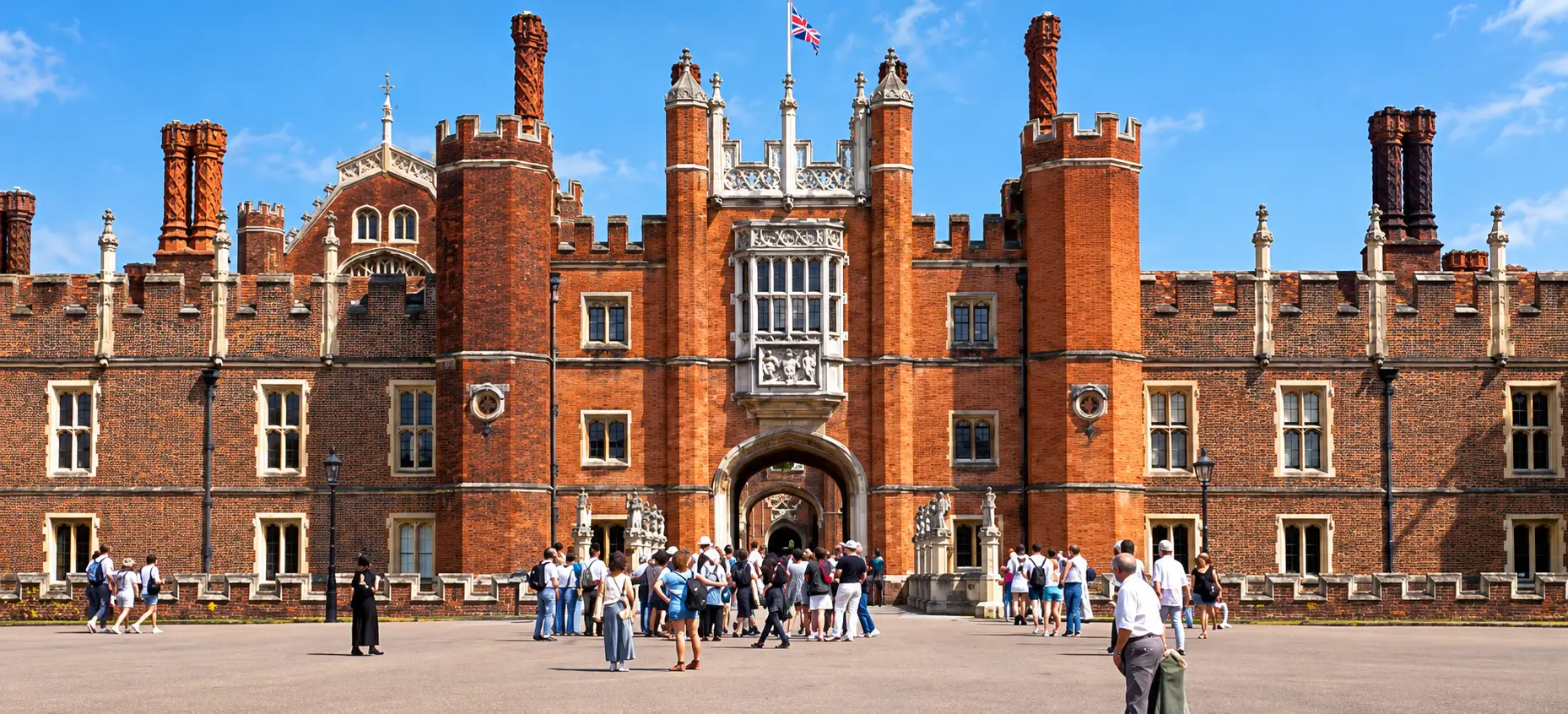
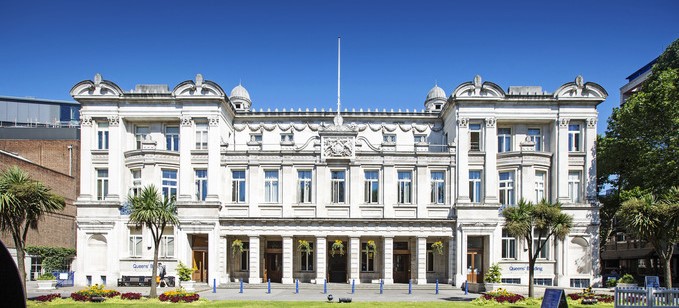
About Queen Mary University of London
Queen Mary’s academic identity runs through three faculties: the Faculty of Humanities and Social Sciences, the Faculty of Science and Engineering, and Barts and The London School of Medicine and Dentistry. The university counts nine Nobel laureates among its alumni and current staff. More than 32,000 students study here, from over 170 nationalities, with roughly 45% coming from overseas among the most diverse student bodies of any Russell Group institution, a distinction the Daily Mail’s 2027 university guide called out specifically. It also holds the best record of any Russell Group university in England for admitting undergraduates from state schools and lower-income households less about legacy and pedigree, more about who actually gets a fair shot at a seat.
Queen Mary University of London Ranking
Queen Mary University of London is a Russell Group, research-intensive university with a powerful international reputation for academic excellence and strong worldwide ranking. Its research strength is particularly notable, with 92% of its research assessed as internationally excellent or world-leading in the latest REF assessment.
World Ranking
| Ranking Organisation | Position | Year |
| QS World University Rankings | #103 | 2027 |
| Times Higher Education World University Rankings | #134 | 2026 |
| U.S. News Best Global Universities | #101 (top 10 in UK) | 2026–27 |
| ARWU (Shanghai Ranking) | #201–300 | 2026 |
QS Ranking
| Metric | Details |
| QS World University Rankings 2024 | Joint #145 |
| QS World University Rankings 2027 | #103 |
| Improvement | 42 places over three ranking cycles |
| Russell Group comparison | Widest gain among Russell Group universities during this period |
UK Ranking
| Ranking Organisation | UK Position | Year |
| Complete University Guide | 16th (Research Quality) | 2026 |
| The Guardian University Guide | Top 10 (US News basis) | 2026 |
| REF 2021 (Research Excellence Framework) | Joint 7th | 2021 |
Subject Rankings
| Subject | Ranking Body | Position |
| Dentistry | QS World University Rankings by Subject 2026 | #12 |
| Law | QS World University Rankings by Subject 2026 | #42 |
| Law | THE Subject Rankings 2026 | #44–46 |
| Medicine / Clinical and Health | THE Subject Rankings 2026 | #68–72 |
| Economics | ARWU 2025 | #46 |
| Engineering and Computer Science | THE Subject Rankings 2026 | #126–150 |
Queen Mary University of London Courses for Indian Students
Indian applicants tend to cluster around four faculties here, and it’s worth knowing why: Business and Management, Computer Science and Engineering, Law, and Medicine and Dentistry aren’t just popular; they’re the subjects where Queen Mary’s global subject rankings genuinely back up the reputation, rather than the reputation running ahead of the data.
Note: Many undergraduate programmes are also available with a Year Abroad or Year in Industry, normally making them 4 years. Some courses have an integrated foundation year, making the standard route 4 years. For example, Computer Science is offered as a 3-year BSc, 4-year foundation/industrial/year-abroad options, and a 4-year MSci.
The 2026 undergraduate prospectus confirms, for example, the 5-year standard Medicine programme and 4-year Graduate Entry Medicine programme.
For example, QMUL lists Artificial Intelligence MSc as 1-year full-time or 2-year part-time, while Advanced Aerospace Engineering MSc and Advanced Materials Science and Engineering MSc are listed as 1-year full-time programmes.
For instance, QMUL's English BA is 3 years, while its English with Year Abroad option is 4 years. Similarly, the History MA is 1 year full-time or 2 years part-time.
Undergraduate Courses
| Undergraduate Course | Degree | Typical Duration |
| Accounting and Management | BSc (Hons) | 3 years |
| Actuarial Science | BSc (Hons) | 3 years |
| Actuarial Science with Data Analytics | BSc (Hons) | 3 years |
| Biochemistry | BSc (Hons) | 3 years |
| Biology | BSc (Hons) | 3 years |
| Biomedical Sciences | BSc (Hons) | 3 years |
| Business Management | BSc (Hons) | 3 years |
| Business with Law | BSc (Hons) | 3 years |
| Chemistry | BSc (Hons) | 3 years |
| Computer Science | BSc (Hons) | 3 years |
| Computer Science with Artificial Intelligence | BSc (Hons) | 3 years |
| Computer Science with Management | BSc (Hons) | 3 years |
| Computer Systems Engineering | BEng (Hons) | 3 years |
| Economics | BSc (Econ) (Hons) | 3 years |
| Economics and Finance | BSc (Econ) (Hons) | 3 years |
| Economics, Statistics and Mathematics | BSc (Econ) (Hons) | 3 years |
| Electronic Engineering | BEng (Hons) | 3 years |
| Engineering | BEng (Hons) | 3 years |
| English | BA (Hons) | 3 years |
| English and Drama | BA (Hons) | 3 years |
| Film | BA (Hons) | 3 years |
| Finance | BSc (Hons) | 3 years |
| French | BA (Hons) | 3 years |
| Geography | BA/BSc (Hons) | 3 years |
| German | BA (Hons) | 3 years |
| History | BA (Hons) | 3 years |
| International Business | BSc (Hons) | 3 years |
| International Relations | BA (Hons) | 3 years |
| Law | LLB (Hons) | 3 years |
| Liberal Arts | BA (Hons) | 3 years |
| Linguistics | BA (Hons) | 3 years |
| Mathematics | BSc (Hons) | 3 years |
| Mathematics and Statistics | BSc (Hons) | 3 years |
| Mathematics with Finance and Accounting | BSc (Hons) | 3 years |
| Mechanical Engineering | BEng (Hons) | 3 years |
| Medicine | MBBS | 5 years |
| Neuroscience | BSc (Hons) | 3 years |
| Pharmacology and Innovative Therapeutics | BSc (Hons) | 3 years |
| Physics | BSc (Hons) | 3 years |
| Politics | BA (Hons) | 3 years |
| Psychology | BSc (Hons) | 3 years |
| Robotics Engineering | BEng (Hons) | 3 years |
| Sociology | BA (Hons) | 3 years |
| Spanish | BA (Hons) | 3 years |
| Zoology | BSc (Hons) | 3 years |
Undergraduate Medicine & Related Programmes
| Course | Degree | Duration |
| Medicine | MBBS | 5 years |
| Medicine – Graduate Entry Programme | MBBS | 4 years |
| Medicine (Malta) | MBBS | 5 years |
| Dentistry | BDS | 5 years |
| Oral and Dental Sciences | BSc | 3 years |
Postgraduate Courses
QMUL's postgraduate portfolio is substantially larger than the undergraduate list and includes MA, MSc, LLM, MRes, PGDip, PGCert and clinical postgraduate qualifications. The university's 2026 postgraduate prospectus covers programmes across business, economics, law, medicine, science, engineering, humanities and social sciences.| Postgraduate Course | Qualification | Typical Full-Time Duration |
| Accounting and Finance | MSc | 1 year |
| Actuarial Science and Data Analytics | MSc | 1 year |
| Advanced Aerospace Engineering | MSc | 1 year |
| Advanced Materials Science and Engineering | MSc | 1 year |
| Artificial Intelligence | MSc | 1 year |
| Banking and Finance | MSc | 1 year |
| Big Data Science | MSc | 1 year |
| Biomedical Science | MSc | 1 year |
| Business Analytics | MSc | 1 year |
| Business Management | MSc | 1 year |
| Clinical Drug Development | MSc | 1 year |
| Clinical Microbiology | MSc | 1 year |
| Clinical Research | MRes/MSc | 1 year |
| Computer Science | MSc | 1 year |
| Computing and Information Systems | MSc | 1 year |
| Data Analytics | MSc | 1 year |
| Digital Marketing | MSc | 1 year |
| Economics | MSc | 1 year |
| Economics and Finance | MSc | 1 year |
| Electronic Engineering | MSc | 1 year |
| Finance | MSc | 1 year |
| Financial Mathematics | MSc | 1 year |
| Global Development | MA | 1 year |
| History | MA | 1 year |
| International Business | MSc | 1 year |
| International Relations | MA | 1 year |
| Investment and Finance | MSc | 1 year |
| Law | LLM | 1 year |
| Management | MSc | 1 year |
| Marketing | MSc | 1 year |
| Mathematics | MSc | 1 year |
| Mechanical Engineering | MSc | 1 year |
| Medical Education | MSc | 1 year |
| Medical Engineering | MSc | 1 year |
| Neuroscience | MSc | 1 year |
| Pharmaceutical Chemistry | MSc | 1 year |
| Physics | MSc | 1 year |
| Psychology | MSc | 1 year |
| Public Health | MSc | 1 year |
| Robotics | MSc | 1 year |
| Risk Analytics | MSc | 1 year |
| Software Engineering | MSc | 1 year |
| Telecommunications | MSc | 1 year |
| Translation and Interpreting | MA | 1 year |
| International Human Rights Law | LLM | 1 year |
| Commercial and Corporate Law | LLM | 1 year |
| Intellectual Property Law | LLM | 1 year |
| Regulation and Compliance | LLM | 1 year |
| English Literature | MA | 1 year |
| Creative Writing | MA | 1 year |
| Film Studies | MA | 1 year |
| Linguistics | MA | 1 year |
| Political Science | MSc | 1 year |
| Sociology | MSc | 1 year |
Important duration variations
| Study option | Typical Duration |
| Standard Bachelor's degree | 3 years |
| Bachelor's + Year Abroad | 4 years |
| Bachelor's + Year in Industry | 4 years |
| Bachelor's + Integrated Foundation | 4 years |
| Integrated Master's (MSci/MEng) | 4 years |
| Medicine MBBS | 5 years |
| Graduate Entry Medicine | 4 years |
| Standard Master's (full-time) | 1 year |
| Master's (part-time) | 2 years |
| PhD/Research degree | Usually 3–4+ years |
Other Programs
Beyond standard degrees, Queen Mary runs a one-year pre-Masters Graduate Diploma (Social Sciences and Humanities, or Economics and Finance) for students who don’t yet meet direct postgraduate entry, and distance-learning programmes in Law, Medicine, and Dentistry-adjacent fields for students who want a Queen Mary qualification without relocating.Queen Mary University of London Fees for Indian Students
Fees here vary more sharply by subject; a Humanities undergraduate degree and an MBBS can differ by tens of thousands of pounds a year. So we recommend that you do not treat any single fee structure the same for other degrees as well.
University Fees
Beyond tuition, budget for a non-refundable £50 administration fee; the Immigration Health Surcharge during your visa application should also be taken into account. Queen Mary University of London also offers a 1% prompt-payment discount to eligible students whose tuition fees exceed £10,000 and who pay their full fees before enrolment. The discount is applied to the amount payable upfront, helping students reduce their overall tuition cost.Tuition Fees
| Study Level | Typical Annual Fee Range (GBP) | Approximate INR* |
| Undergraduate: Humanities & Social Sciences | £25,500 | ₹29.8 lakh |
| Undergraduate: Science & Engineering | £25,500 – £29,450 | ₹29.8 lakh – ₹34.5 lakh |
| Undergraduate: MBBS/BDS (Medicine/Dentistry) | up to £53,950 | up to ₹63.1 lakh |
| Postgraduate Taught (MSc/MA, most subjects) | £24,950 – £33,000 | ₹29.2 lakh – ₹38.6 lakh |
| Postgraduate: Business, Law, Medicine & Dentistry | Non-standard, generally higher | Confirm per course |
Fees For Indian Students
International students pay at least 50% of their annual fee upfront before enrolment, with the remainder payable by 31 January or across four instalments up to that date. This upfront structure catches some first-time applicants off guard; it's a materially different cash-flow requirement than paying termly, so build it into your funding plan early rather than assuming a UK-style instalment schedule applies by default.Queen Mary University of London Cost of Living
As a rough all-in guide excluding tuition, most students budget somewhere between £1,300 and £2,100 a month depending on accommodation choice and lifestyle.
| Types of Expenses | Annual Expenses |
|---|---|
| Expense | Typical Weekly/Monthly Cost (GBP) |
| University halls (Mile End, Whitechapel, etc.) | From £170 per week (non-ensuite) |
| Private shared accommodation | £250–£500 per week, depending on area |
| Zone 3–5 off-campus areas (Leytonstone, Ilford, Barking) | Noticeably cheaper than Zone 2 |
| Local transport (Student Oyster, 30% discount) | Roughly £90–£150 per month depending on zones travelled |
| Food, personal expenses | £1,000–£1,300 per month, excluding rent, per most student budgets |
Queen Mary University of London Scholarships for Indian Students
Indian applicants aren’t offered a separate India-only scholarship, but they’re fully eligible for international scholarships. The School of Economics and Finance specifically runs up to 52 Global Scholarships (worth £5,000–£7,000) across selected MSc programmes, a meaningfully larger pool than most UK business schools offer. There’s also a Women in Economics and Finance PGT Scholarship worth £5,000 for female applicants to eligible postgraduate courses.
None of this is guaranteed by simply holding an offer; the merit-based awards (Global Talent, Global Excellence, President’s) are genuinely competitive and assessed on academic strength, so a stronger application (not just a qualifying one) can improve your odds.
| Scholarship | Level | Award | Notes |
| Global Talent Scholarship | Undergraduate | Up to £12,000 | For high-achieving international offer holders |
| Global Talent Scholarship | Postgraduate Taught | £5,000 | Minimum 2:1 or equivalent; automatic consideration once you apply |
| Global Excellence Scholarship | Postgraduate Taught | £7,000 | If you’re awarded the Global Talent Scholarship, you’re automatically considered for this too : no separate application |
| President’s Global Scholarships | Postgraduate Taught | £10,000 | Highly qualified applicants, generally requiring a First Class equivalent degree |
| Chevening Scholarships | Postgraduate Taught | Full funding (tuition, living costs, flights) | UK government scheme; highly competitive, separate application process |
| Commonwealth Masters Scholarships | Postgraduate Taught | Full funding | Separate eligibility and application process |
Queen Mary University of London Eligibility & Admission Requirements
Entry requirements are set at the course level, which means two degrees in the same faculty can ask for different grades or subject combinations.
The figures below are typical starting points rather than guarantees, and competitive programmes often expect scores above the minimum.
Bachelor’s Degree
- Class 12 (CBSE/CISCE or recognised state boards): generally around 70–75% overall, with relevant subject requirements for courses like Engineering (Physics, Chemistry, Maths) or Biomedical Sciences.
- A UCAS application, including a personal statement and an academic reference
- English language proficiency evidence (see IELTS section below) unless a recognised waiver applies.
- Some programmes, particularly Medicine, Dentistry, and Architecture, may require additional tests, a portfolio, or an interview.
Master’s Degree
- A recognised bachelor’s degree, typically equivalent to a UK upper-second-class (2:1) honours degree, broadly 58–65% depending on the Indian university’s grading band and the specific course
- A statement of purpose outlining academic and career motivation
- Academic transcripts and, for some programmes, a CV and references
- Relevant work experience or a research proposal for select MBA, research-intensive, or professional programmes.
Newcastle University Acceptance Rate
Newcastle University does not publish an official acceptance rate: the closest reliable figure comes from UCAS undergraduate admissions data.- For 2025 entry, Newcastle received 37,575 applications and accepted 6,780 students, giving an acceptance rate of approximately 18%.
- The overall offer rate was considerably higher, at around 77.6%, meaning most applicants received an offer, though not all of them enrolled.
- This pattern has stayed fairly consistent in recent years, with the accepted rate ranging between 17.5% and 20% and the offer rate between 76.6% and 78.2% from 2021 to 2025.
- Acceptance is highly course-dependent: programmes like Medicine, Dentistry, and Law are significantly more competitive than this university-wide average.
Newcastle University IELTS requirements
English test scores are one of the most common reasons why students face rejections. Do not delay this crucial step. Hence, it is worth checking the exact requirement for a specific course rather than assuming the university requirement:| Programme Level | IELTS Overall | Minimum in Each Sub-Skill |
| Undergraduate | 6.5 | 5.5 |
| Postgraduate | 6.5 (varies by course) | Check individual course page |
- Newcastle also accepts PTE Academic (a score of 70 corresponds to IELTS 6.5) and TOEFL iBT.
- Some Indian students qualify for an English test waiver- for example, applicants with 75% or above in English in their Class 12 CBSE or CISCE examination may be exempt, subject to the course’s specific policy.
Queen Mary University of London UCAS points
For A-level applicants, Queen Mary’s undergraduate offers span a wide range depending on subject: BBB (120 UCAS points) at the accessible end, up to AAA (168 points) for the most competitive courses, with Medicine specifically requiring AAA achieved within a two-year sitting window and a minimum UCAS tariff around 152 points for shortlisting alongside your UCAT score. IB applicants typically need 32–38 points depending on subject, with specific Higher Level subject scores required : Medicine, for instance, generally asks for 38 points overall, including 666 at Higher Level. Queen Mary also considers the Extended Project Qualification (EPQ): applicants offering an EPQ alongside A-levels may receive an alternative offer one grade lower on the A-levels, with a specific EPQ grade required instead.How to Apply to Queen Mary University of London from India
Applying from India follows broadly the same process as any other international applicant, but a few steps deserve extra attention, particularly document preparation and the UCAS system for undergraduate courses.
- Shortlist a course on the official Newcastle University website and check its specific entry requirements, intake, and fee.
- Check eligibility, including academic percentage, subject prerequisites, and English language score.
- Prepare documents: academic transcripts (Class 10 and 12, or degree marksheets for postgraduate applicants), a passport copy, a personal statement or statement of purpose, academic references, and a CV for most postgraduate and MBA applications.
- Submit the application: undergraduate applicants apply through UCAS; postgraduate applicants generally apply directly via the university’s online portal.
- Receive a conditional or unconditional offer, and, if applicable, get automatically considered for eligible Vice-Chancellor’s scholarships.
- Meet offer conditions, such as final grades or an English test score, within the stated deadline.
- Pay the tuition fee deposit (where required) to confirm the place.
- Apply for a Student visa and the CAS (Confirmation of Acceptance for Studies) once the offer is confirmed, then arrange pre-departure formalities such as the Immigration Health Surcharge payment and accommodation booking.
Queen Mary University of London Intakes
Queen Mary University of London primarily offers admissions for the September intake, which is the main intake for most undergraduate and postgraduate programmes. Some postgraduate courses may also have a January intake depending on the programme.
January Intake
A limited set of postgraduate taught programmes accept January entry, mainly useful for students who’ve missed the September cycle or want a faster start. Availability is meaningfully narrower than September. Make sure to confirm availability on your specific course page before planning around it.September Intake
This is the primary intake across nearly all undergraduate and postgraduate programmes, and the one carrying the widest scholarship cycle. Medicine and Dentistry applicants should note their UCAS deadline sits months earlier than the general undergraduate deadline, even though the course itself still starts in September.UK Student Visa
International students who plan to study at Queen Mary University of London generally need to obtain a UK Student visa before starting their course. The visa process involves meeting UKVI requirements, obtaining a Confirmation of Acceptance for Studies (CAS), demonstrating sufficient funds, and submitting the required supporting documents.
Key Visa Requirements
- Valid Passport: Students must have a valid passport or travel document.
- Confirmation of Acceptance for Studies (CAS): You must obtain a CAS from Queen Mary University of London before applying for a Student visa.
- Unconditional Offer and Deposit: For students who are required to pay a university deposit, the relevant deposit must be received before QMUL can issue the CAS.
- Proof of Financial Funds: Students normally need to demonstrate enough money to cover their outstanding first-year tuition fees plus living expenses.
- 28-Day Financial Requirement: The required funds generally need to be held continuously for at least 28 consecutive days before submitting the Student visa application.
- English Language Proficiency: Students must meet the English-language requirement for their chosen programme. QMUL accepts various English-language tests and qualifications depending on the programme and its assigned English band.
- Academic Qualification Documents: Students may need to provide evidence of their previous academic qualifications. However, students applying for a course at degree level (RQF Level 6) or above at QMUL generally do not need to submit qualification evidence with the visa application because of the University's status as a Higher Education Provider with a track record of compliance, although UKVI can request evidence.
- ATAS Certificate, if Applicable: Some courses require Academic Technology Approval Scheme (ATAS) clearance. If your programme requires ATAS, you must obtain the certificate before QMUL can issue your CAS.
- Tuberculosis (TB) Test Certificate: Students applying from overseas may need to provide a TB test certificate if they are resident in a country for which UKVI requires TB screening.
- Official Translations: Documents submitted in a language other than English or Welsh generally need to be accompanied by an appropriate official translation.
- Biometric Information: Applicants may need to provide their biometric information according to the instructions given during the application process.
- Visa Application Fee: Applicants must pay the applicable Student visa application fee when submitting their application.
Career Opportunities & Placements
Queen Mary’s most recent Graduate Outcomes figures show 90% of graduates in work or further study 15 months after graduation, with postgraduate and PhD graduates specifically at 95% within six months and undergraduates at 93% within six months :
| Career Area | Potential Roles | Average/Typical Salary After Graduation |
| Finance & Economics | Financial Analyst, Economist, Investment Analyst, Risk Analyst | £33,000–£35,500 initially/after 3 years |
| Business & Management | Business Analyst, Management Consultant, Marketing Executive, Operations Manager | £29,000–£32,000 |
| Mathematics & Statistics | Data Analyst, Statistician, Quantitative Analyst, Risk Analyst | £30,000–£32,000 |
| Social Sciences | Policy Analyst, Researcher, Civil Service Officer, Social Researcher | £31,000–£32,000 |
| English & Media | Content Writer, Communications Executive, Publishing, Media Professional | £24,500–£27,000 |
| Accounting & Finance | Accountant, Audit Associate, Financial Analyst, Tax Associate | Around £29,000+ |
Queen Mary University of London Campus Life
Mile End is the headline campus :- The largest self-contained university site in London, with lecture halls and nearly 3,000 student bedrooms across its sites
- The Students’ Union, a gym, cafes, and a supermarket are all within the campus perimeter, and Mile End tube station is directly at the gate on the Central, District, and Hammersmith & City lines.
- Whitechapel, Charterhouse Square, and West Smithfield host the Medicine and Dentistry schools, putting clinical students close to Barts hospital sites rather than commuting across the city for placements.
Queen Mary University of London Student life Experiences
With international students making up close to 45% of the student body and more than 170 nationalities represented, Queen Mary’s social life doesn’t orbit around one dominant group rather, it also offers :- Indian and South Asian student societies that are genuinely active rather than token additions to a societies list.
- East London itself brings a different flavour than Central London’s tourist-facing image.
- Whitechapel’s markets, Brick Lane’s food scene (a serious draw if you’re missing Indian food specifically), and Victoria Park all sit within easy reach of Mile End.
- The self-contained campus structure means first-term social life happens organically: halls, the Students’ Union, and campus events all sit within a few minutes’ walk, which matters disproportionately in your first weeks before you’ve built a social network across the wider city.
Why Study at Queen Mary University of London?
Russell Group research credentials and a genuine campus community that no other London Russell Group university can offer structurally, as well as subject rankings in Dentistry, Law, and Medicine. Here is why:- One of the most diverse and socially representative student bodies in the Russell Group, and East London living costs that undercut Central London by a real margin without sacrificing access to the city. All of this hints at a pleasant and lifelong experience.
- None of that changes the fact that UCL, KCL, and LSE all rank higher globally: the right call depends on whether your specific subject, budget, and preference for a self-contained campus are considered on time or not.
Students Essential Service
Settling into a new country goes more smoothly when a student knows which university services to lean on from week one. Newcastle’s Student Wellbeing and International Student gets:- Support teams offer visa and immigration advice, academic skills support, disability and mental health services, and a dedicated International Advice Team that helps with everything from bank account setup to Council Tax exemption queries.
- The Students’ Union runs a hardship fund and cost-of-living support specifically for international students, alongside free financial advice sessions useful for students managing a fixed budget in a new currency.
Why Choose Global Opportunities to Study at Queen Mary University of London?
Between decoding a banded IELTS system, converting your Indian degree percentage into the right classification band for postgraduate entry, and tracking a 50%-upfront fee structure that differs from what most students expect, Queen Mary’s admissions process rewards careful preparation. Global Opportunities works with:- students through each stage, right from shortlisting the desired course and campus as per your goals and career aspirations to reviewing personal statements and SOPs,
- Helping you with applying for the merit-based scholarships and preparing for the Student visa and pre-departure process.
- The goal is an application that reflects the strength of the student’s actual profile, not one weakened by a missed band or a misread deadline.
Similar Universities in the UK
| University of Bradford | London South Bank University | University of Chester |
| Cardiff Metropolitan University UWIC | Heriot-Watt University | University of East London |
| Cranfield University | Newcastle University | University of Lincoln |
| University of Exeter | Oxford Brookes University | University of Plymouth |
| Istituto Marangoni | Middlesex University | University of Reading |
| Keele University | Queen's University Belfast | University of Roehampton |
| Kingston University | Robert Gordon University (RGU) | University of South Wales |
| Leeds Beckett University | Teesside University | University of Sunderland |
| University of Bolton | University of Sussex |
Top Countries to Study Abroad for Indian Students
| Study In Canada | Study In New Zealand | |
| Study In Ireland | ||
| Study In Singapore | ||
| Study In Malaysia |
Related Articles
| Artificial Intelligence Courses in the UK | ||
| Data Science Courses in the UK | ||
| Engineering Management in the UK |
Queen Mary University of London Gallery




Frequently Asked Questions
Yes, it is a Russell Group university with strong subject rankings, a dedicated Vice-Chancellor’s Excellence Scholarship for Indian applicants, an established South Asian student community, and lower living costs than many other major UK study cities.
Newcastle placed 149th in the QS World University Rankings 2027. However, several individual subjects, including Geography and Dentistry, rank within the world’s top 50.
Compared with London, Manchester, or Bristol, Newcastle is considered one of the more affordable UK student cities, with typical monthly living costs (excluding tuition) around £900–£1,300 depending on accommodation and lifestyle.
It is particularly well known for medicine and health sciences, engineering, geography, dentistry, and its Business School, alongside a research culture rated 42% world-leading in the UK’s 2021 Research Excellence Framework.
It varies significantly by course. Programs like Medicine, Dentistry, and Law are considerably more competitive than most engineering, business, and general science degrees. Newcastle does not publish one official acceptance rate.
Newcastle does not publish a country-specific enrolment figure publicly, but Indian students form a significant and growing part of its international student population, supported by dedicated scholarships and an active South Asian student community.
Newcastle University does not publish a current, course-by-course gender ratio, and this varies significantly by subject. Applicants interested in a specific programme’s cohort profile should check with the relevant academic school directly.
You Should Also Check