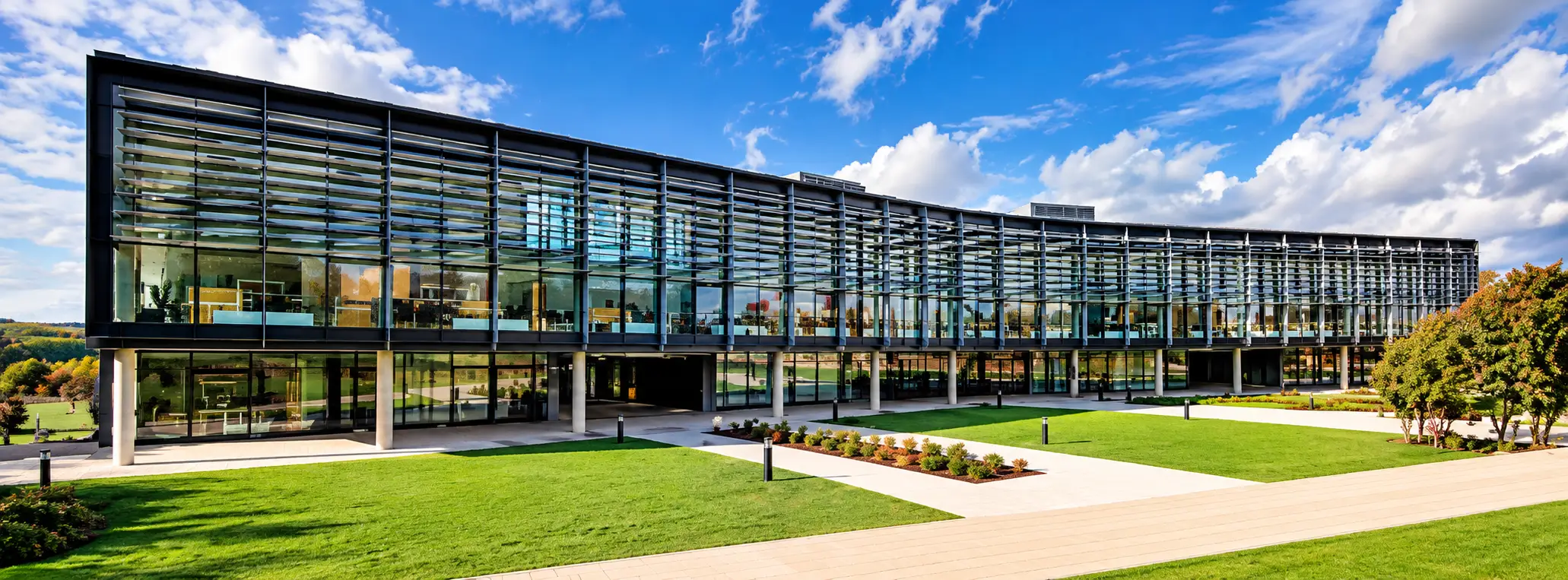
About University of Brighton
The University of Brighton is a public university, established in the year 1852. Rather than studying on one isolated campus, they offer students to become part of a well-known coastal city with three university campuses spread across Brighton. The University of Brighton also has a noticeably practical approach to education. Its subject range is broad, covering business, engineering, computing, architecture, art and media, health sciences, education, law, psychology and several other fields. If you are considering the University of Brighton from India, however, the decision should not be based on location or rankings alone. Your course, tuition fees, scholarship possibilities, entry requirements, accommodation costs and career plans all need to work together.
University of Brighton Ranking
Looking at the university’s ranking across multiple recognised organisations can provide a more balanced view of a university’s academic position. Read below:
| Ranking | University of Brighton Position | Year |
| Times Higher Education World University Rankings | 601–800 | 2026 |
| QS World University Rankings | 801–850 | 2026 |
| Times & Sunday Times Good University Guide | 77th in the UK | 2027 Guide |
| THE Psychology | 301–400 | 2026 |
| THE Business & Economics | 401–500 | 2026 |
| THE Medical & Health | 401–500 | 2026 |
| THE Education Studies | 401–500 | 2026 |
| Guardian – Education | Top 15 in the UK | 2026 |
University of Brighton Courses for Indian Students
With more than 250 undergraduate and postgraduate courses listed by the university, Brighton gives applicants plenty of room to narrow their options according to subject and career direction.
Undergraduate Courses
| Undergraduate course | Duration |
| 3D Design and Craft BA(Hons) | 3 years |
| Accounting and Finance BSc(Hons) | 3 years |
| Accounting, Finance and Economics BSc(Hons) with integrated foundation year | 4 or 5 years |
| Aerospace Engineering BEng(Hons) | 3 years |
| Aerospace Engineering BEng(Hons) with integrated foundation year | 4 years |
| Aerospace Engineering BSc(Hons) top-up degree | 1 year minimum |
| Aerospace Engineering MEng | 4 years |
| Animation BA(Hons) | 3 years |
| Applied science integrated foundation year | 4 or 5 years |
| Architecture and design integrated foundation year | 4 or 5 years |
| Architecture BA(Hons) | 3 years |
| Art History and Visual Culture BA(Hons) | 3 years |
| Automotive Engineering BEng(Hons) | 3 years |
| Automotive Engineering BEng(Hons) with integrated foundation year | 4 years |
| Automotive Engineering BSc(Hons) top-up degree | 1 year |
| Automotive Engineering MEng | 4 years |
| Biological Sciences BSc(Hons) | 3 years |
| Biological Sciences BSc(Hons) with integrated foundation year | 4 years |
| Biological Sciences MSci | 4 years |
| Biomedical Science BSc(Hons) | 3 years |
| Biomedical Science BSc(Hons) with integrated foundation year | 4 years |
| Biomedical Science MSci | 4 years |
| Business Analytics BSc(Hons) | 3 years |
| Business and law integrated foundation year | 4 or 5 years |
| Business Management BSc(Hons) | 3 years |
| Business Management BSc(Hons) top-up degree | 1 year |
| Business Management BSc(Hons) with integrated foundation year | 4 or 5 years |
| Business Management with Economics BSc(Hons) | 3 years |
| Business Management with Entrepreneurship BSc(Hons) | 3 years |
| Business Management with Events BSc(Hons) | 3 years |
| Business Management with Finance BSc(Hons) | 3 years |
| Business Management with Human Resource Management BSc(Hons) | 3 years |
| Business Management with Law BSc(Hons) | 3 years |
| Business Management with Marketing BSc(Hons) | 3 years |
| Business Management with Tourism BSc(Hons) | 3 years |
| Civil Engineering BEng(Hons) | 3 years |
| Civil Engineering BEng(Hons) with integrated foundation year | 4 years |
| Civil Engineering MEng | 4 years |
| Civil Engineering MEng with integrated foundation year | 5 years |
| Civil Engineering with Construction Management BEng(Hons) | 3 years |
| Civil Engineering with Construction Management MEng | 4 years |
| Civil with Environmental Engineering BEng(Hons) | 3 years |
| Civil with Environmental Engineering MEng | 4 years |
| Civil with Structural Engineering BEng(Hons) | 3 years |
| Civil with Structural Engineering MEng | 4 years |
| Clinical Practice BSc(Hons) top-up degree | 1 year |
| Computer Science BSc(Hons) | 3 years |
| Computer Science for Games BSc(Hons) | 3 years |
| Computer Science with Artificial Intelligence BSc(Hons) | 3 years |
| Computer Science with Cyber Security BSc(Hons) | 3 years |
| Construction Project Management BSc(Hons) | 3 years |
| Contemporary History BA(Hons) | 3 years |
| Content Creation BA(Hons) | 3 years |
| Creative Writing BA(Hons) | 3 years |
| Creative Writing with Comics and Graphic Novels BA(Hons) | 3 years |
| Creative Writing with Wellbeing BA(Hons) | 3 years |
| Criminology and Sociology BA(Hons) | 3 years |
| Criminology BA(Hons) | 3 years |
| Data Science BSc(Hons) | 3 years |
| Design Engineering BEng(Hons) | 3 years |
| Design Engineering BEng(Hons) with integrated foundation year | 4 years |
| Design Engineering MEng | 4 years |
| Designer Maker BA(Hons) (partner college) | 6 years part-time |
| Diagnostic Radiography BSc(Hons) | 3 years |
| Digital Games Development BSc(Hons) | 3 years |
| Digital Games Development BSc(Hons) with integrated foundation year (partner college) | 4 years |
| Ecology and Conservation BSc(Hons) | 3 years |
| Ecology and Conservation MSci | 4 years |
| Economics BSc(Hons) | 3 years |
| Economics with Data Science BSc(Hons) | 3 years |
| Economics with Finance BSc(Hons) | 3 years |
| Electrical and Electronic Engineering BEng(Hons) | 3 years |
| Electrical and Electronic Engineering BEng(Hons) with integrated foundation year | 4 years |
| Electrical and Electronic Engineering MEng | 4 years |
| Electronic and Communication Engineering BEng(Hons) | 3 years |
| Electronic and Communication Engineering BEng(Hons) with integrated foundation year | 4 years |
| Electronic and Communication Engineering MEng | 4 years |
| Electronic Engineering BSc(Hons) top-up degree | 1 year |
| Electronic Music and Sound BA(Hons) | 3 years |
| Engineering integrated foundation year | 4 or 5 years |
| English Literature and Creative Writing BA(Hons) | 3 years |
| English Literature BA(Hons) | 3 years |
| English Literature with Comics and Graphic Novels BA(Hons) | 3 years |
| English Literature with Sexuality and Gender BA(Hons) | 3 years |
| Environmental Management BSc(Hons) | 3 years |
| Environmental Sciences BSc(Hons) | 3 years |
| Exercise, Health and Rehabilitation Science BSc(Hons) | 3 years |
| Fashion and Design History BA(Hons) | 3 years |
| Fashion Communication with Business Studies BA(Hons) | 3 years |
| Fashion Design with Business Studies BA(Hons) | 3 years |
| Film BA(Hons) | 3 years |
| Finance and Investment BSc(Hons) | 3 years |
| Fine Art BA(Hons) | 3 years |
| Fine Art Painting BA(Hons) | 3 years |
| Fine Art Printmaking BA(Hons) | 3 years |
| Games Art and Design BA(Hons) | 3 years |
| Geography BA(Hons) | 3 years |
| Geography BSc(Hons) | 3 years |
| Globalisation: History, Politics, Culture BA(Hons) | 3 years |
| Graphic Design BA(Hons) | 3 years |
| Illustration BA(Hons) | 3 years |
| Interior Architecture BA(Hons) | 3 years |
| Interior Design BA(Hons) | 3 years |
| International Business Management BSc(Hons) | 3 years |
| Journalism BA(Hons) | 3 years |
| Law LLB(Hons) | 3 years |
| Law LLB(Hons) with integrated foundation year | 4 years |
| Law with Business LLB(Hons) | 3 years |
| Law with Criminology LLB(Hons) | 3 years |
| Marketing BSc(Hons) | 3 years |
| Mechanical and Manufacturing Engineering BSc(Hons) top-up degree | 1 year |
| Mechanical Engineering BEng(Hons) | 3 years |
| Mechanical Engineering BEng(Hons) with integrated foundation year | 4 years |
| Mechanical Engineering MEng | 4 years |
| Media Production BA(Hons) | 3 years |
| Media Studies BA(Hons) | 3 years |
| Medicine BM BS | 5 years |
| Midwifery BSc(Hons) | 3 years |
| Motorsport Engineering BSc(Hons) top-up (partner college) | 1 year |
| Motorsport Engineering FdEng (partner college) | 2 years part-time |
| Music Business and Media BA(Hons) | 3 years |
| Nursing (Adult) BSc(Hons) | 3 years |
| Nursing (Child) BSc(Hons) | 3 years |
| Nursing (Mental Health) BSc(Hons) | 3 years |
| Occupational Therapy BSc(Hons) | 3 years |
| Paramedic Science BSc(Hons) | 3 years |
| Pharmaceutical Science BSc(Hons) | 3 years |
| Pharmacy MPharm | 4 years |
| Pharmacy MPharm with preparatory year | 5 years |
| Philosophy, Politics, Ethics BA(Hons) | 3 years |
| Photography BA(Hons) | 3 years |
| Physical Education BA(Hons) with QTS | 3 years |
| Physiotherapy BSc(Hons) | 3 years |
| Podiatry BSc(Hons) | 3 years |
| Politics and International Relations BA(Hons) | 3 years |
| Politics BA(Hons) | 3 years |
| Politics, Sexuality and Gender BA(Hons) | 3 years |
| Primary Education (3–7 years) BA(Hons) with QTS | 3 years |
| Primary Education (5–11 years) BA(Hons) with QTS | 3 years |
| Product Design BSc(Hons) | 3 years |
| Professional Practice BSc(Hons) top-up degree | 1 year |
| Psychology and Criminology BA(Hons) | 3 years |
| Psychology and Sociology BA(Hons) | 3 years |
| Psychology BSc(Hons) | 3 years |
| Psychology with Counselling Studies BSc(Hons) | 3 years |
| Quantity Surveying BSc(Hons) | 3 years |
| Robotics and Mechatronics Engineering BEng(Hons) | 3 years |
| Robotics and Mechatronics Engineering BEng(Hons) with integrated foundation year | 4 years |
| Robotics and Mechatronics Engineering MEng | 4 years |
| Social Sciences BA(Hons) | 3 years |
| Social Work BSc(Hons) | 3 years |
| Sociology BA(Hons) | 3 years |
| Software Engineering BSc(Hons) | 3 years |
| Sport and Exercise Science BSc(Hons) | 3 years |
| Sport and Exercise Science with PE BSc(Hons) | 3 years |
| Sport Coaching BSc(Hons) | 3 years |
| Sport Coaching with Development BSc(Hons) | 3 years |
| Sport Coaching with Performance BSc(Hons) | 3 years |
| Sport Coaching with Youth Sport and Physical Education BSc(Hons) | 3 years |
| Sport Management BSc(Hons) | 3 years |
| Sports Journalism BA(Hons) | 3 years |
| Strength and Conditioning BSc(Hons) | 3 years |
Postgraduate Courses
| Postgraduate course | Duration |
| Accounting (ACCA) MSc | 1 year |
| Advanced Clinical Practice MSc | 1 year |
| Advanced Manufacturing MSc | 1 year |
| Ageing and Dementia MSc | 1 year |
| Applied Exercise Physiology MSc | 1 year |
| Applied Sport Physiology MSc | 1 year |
| Approved Mental Health Practice PGDip | 1 year |
| Aquatic Environments MRes | 1 year |
| Architectural and Urban Design MA | 1 year |
| Architectural Research MRes | 1 year |
| Architecture RIBA Part 2 MArch | 2 years |
| Artificial Intelligence and Machine Learning MSc | 1 year |
| Artificial Intelligence and Robotics MSc | 1 year |
| Biological Sciences MRes | 1 year |
| Biomedical Sciences MRes | 1 year |
| Building Information Management MSc | 1 year |
| Chemistry MRes | 1 year |
| Civil Engineering MSc | 1 year |
| Clinical Education MSc | 1 year |
| Clinical Practice PGCert | 1 year |
| Community Psychology MA | 1 year |
| Computer Science MSc | 1 year |
| Construction Project Management MSc | 1 year |
| Creative Writing MA | 1 year |
| Curating Collections and Heritage MA | 1 year |
| Cyber Security MSc | 1 year |
| Data Analytics MSc | 1 year |
| Dental Implant Reconstructive Surgery PGDip | 1 year |
| Diabetes in Primary Care PGCert | 1 year |
| Diploma in Professional Studies in Accounting (ACCA) | Varies |
| Ecology and Conservation MRes | 1 year |
| Economics and Finance MSc | 1 year |
| Engineering Management MSc | 1 year |
| Environmental Assessment and Management MSc | 1 year |
| Environmental Politics MRes | 1 year |
| European MSc in Occupational Therapy | 2 years |
| Finance and Accounting MSc | 1 year |
| Finance and Banking MSc | 1 year |
| Finance and Data Analytics MSc | 1 year |
| Finance and Fintech MSc | 1 year |
| Finance and Investment MSc | 1 year |
| Finance and Risk Management MSc | 1 year |
| Fine Art MA | 1 year |
| Further Education and Skills PGCE | 1 year |
| Games Art and Design MA | 1 year |
| Geographical Information Systems and Environmental Management MSc | 1 year |
| Geoscience MRes | 1 year |
| GIS and Remote Sensing MRes | 1 year |
| Global Branding and Communications MSc | 1 year |
| Global Health MSc | 1 year |
| Global MBA | 1 year |
| Global MBA (online) | 2 years |
| Health and Education MSc | 1 year |
| Health and Management MSc | 1 year |
| Health MSc | 1 year |
| Health Research MRes | 1 year |
| Healthcare Leadership and Commissioning MSc | 1 year |
| History of Design and Material Culture MA | 1 year |
| Humanistic Counselling and Psychotherapy PGDip | 2 years |
| Humanities MRes | 1 year |
| Humanities PGCert | 1 year |
| Independent Prescribing | Varies |
| Interior Design MA | 1 year |
| International Commercial Law LLM | 1 year |
| International Law LLM | 1 year |
| International Management MSc | 1 year |
| Journalism MA | 1 year |
| Law Conversion LLM | 1 year |
| Leading Practice Education PGCert | 1 year |
| Management (Entrepreneurship) MSc | 1 year |
| Management (Human Resources) MSc | 1 year |
| Management MSc | 1 year |
| Management, Practice and Law in Architecture PGDip | 1 year |
| Marketing (Branding and Communications) MSc | 1 year |
| Marketing (Digital Marketing) MSc | 1 year |
| Marketing (International Marketing) MSc | 1 year |
| Marketing MSc | 1 year |
| Medical Education PGCert | 1 year |
| Medical Research MRes | 1 year |
| Nuclear Medicine MSc | 1 year |
| Occupational Therapy (Pre-registration) MSc | 2 years |
| Paediatrics and Child Health MSc | 1 year |
| Pharmaceutical Sciences MRes | 1 year |
| Pharmacy (OSPAP) MSc | 1 year |
| Pharmacy (OSPAP) PGDip | 1 year |
| Photography MA | 1 year |
| Physiotherapy (Pre-registration) MSc | 2 years |
| Podiatry (Pre-registration) MSc | 2 years |
| Politics and Philosophy MA | 1 year |
| Precision Medicine (Cancer) MSc | 1 year |
| Prescribing for Pharmacists | Varies |
| Primary 3–7 years PGCE | 1 year |
| Primary 5–11 years PGCE | 1 year |
| Professional Social Work Practice MSc | 2 years |
| Psychiatry MSc | 1 year |
| Psychodynamic Counselling and Psychotherapy PGDip | 2 years |
| Psychology Conversion MSc | 1 year |
| Psychotherapy MSc | 2 years |
| Public Health MSc | 1 year |
| Regenerative Medicine and Devices MRes | 1 year |
| Riverine and Estuarine Processes MRes | 1 year |
| (Secondary) Art and Design PGCE | 1 year |
| (Secondary) Biology PGCE | 1 year |
| (Secondary) Chemistry PGCE | 1 year |
| (Secondary) English PGCE | 1 year |
| (Secondary) Geography PGCE | 1 year |
| (Secondary) History PGCE | 1 year |
| (Secondary) Mathematics PGCE | 1 year |
| (Secondary) Physical Education PGCE | 1 year |
| (Secondary) Physics PGCE | 1 year |
| School Connect PGCE and School Direct Salaried | 1 year |
| Sequential Design/Illustration MA | 1 year |
| Simulation in Clinical Practice PGCert | 1 year |
| Social Science MRes | 1 year |
| Social Science PGCert | 1 year |
| Social Work MSc | 2 years |
| Specialist Community Practitioner MSc | 1 year |
| Sports Journalism MA | 1 year |
| Strength and Conditioning MSc | 1 year |
| Structural Engineering MSc | 1 year |
| Subject Knowledge Enhancement for teacher training | Varies |
| Supply Chain Management MSc | 1 year |
| Sustainable Design MA | 1 year |
| Sustainable Fashion Business MA | 1 year |
| Sustainable Healthcare PGCert | 1 year |
| Town Planning MSc | 1 year |
| User Experience Design MSc | 1 year |
| Water and Environmental Management MSc | 1 year |
University of Brighton Fees for Indian Students
Tuition fees are often where university comparisons become more practical. At Brighton, there is no single fee that applies to every international student. Your actual cost depends on the level and type of course you choose.
| Course Type | International Tuition Fees |
| Undergraduate classroom-based | £17,796–£19,692 per year |
| Undergraduate laboratory/studio-based | £17,796–£19,692 per year |
| Undergraduate placement year | £2,280 |
| BSMS undergraduate medicine | £49,000 |
| Postgraduate taught – classroom-based | £17,748–£21,114 |
| Postgraduate taught – laboratory-based | £17,748–£21,114 |
| PhD – classroom-based | £15,500 |
| PhD – laboratory-based | £16,980 |
| Professional Doctorate / Doctorate in Education | £18,150 |
University of Brighton Cost of Living
Tuition is only one side of the budget. Brighton is a popular coastal city, and accommodation is likely to be one of your biggest regular expenses. Have a look before your final decision:
| Expense | Published Typical Cost |
| University hall – shared bathroom | From £169/week |
| University hall – ensuite | From £184/week |
| Private studio/1-bed | Around £300/week |
| Private 2-bed flat | Around £207/week per person |
| Private shared house, 3+ beds | Around £132/week per person |
| Private halls, bills included | Around £219/week |
| Room in HMO | Around £180/week |
| Utilities for private accommodation | Approximately £30/week |
University of Brighton Scholarships for Indian Students
Brighton currently provides several scholarship and award routes for eligible international students:
- Vice-Chancellor International Undergraduate Scholarship: eligible students can receive a total tuition reduction of £4,000 across a standard three-year degree- £2,000 in the first year followed by £1,000 in each of the next two years.
- Deans’ Global Talent Awards – Undergraduate: eligible students may receive an additional award of £1,500, subject to the applicable conditions.
- Vice-Chancellor International Postgraduate Scholarship: eligible postgraduate students can receive a £2,000 tuition-fee reduction.
- Deans’ Global Talent Awards – Postgraduate: awards can range from approximately £500 to £1,000, depending on the academic school and current conditions.
University of Brighton Eligibility & Admission Requirements
Brighton provides India-specific academic guidance, which makes it easier to get an initial idea of whether your qualifications fit its entry expectations.
But meeting the general country requirement does not automatically mean you will receive an offer. Individual courses can set higher grades or ask for particular subjects, portfolios, interviews or professional experience.
Bachelor’s Degree
For standard undergraduate entry, applicants from India are generally expected to have completed Standard XII/Higher Secondary School with:- Generally 60–65% overall in Class 12 for undergraduate entry.
- At least five subjects with 40% or above.
- Some courses may require specific subjects or higher academic scores.
- Relevant diplomas or HND qualifications may be considered for advanced entry on a case-by-case basis.
- Creative programmes such as art, design or architecture may require a portfolio or interview.
- English-language requirements vary by course, with IELTS requirements generally starting from 6.0 overall with 5.5 in each component for courses at the standard level.
- Other recognised English-language qualifications may also be accepted.
Master’s Degree
- A bachelor’s degree from a recognised Indian university, normally completed over at least three years.
- Generally 55% or above for postgraduate entry.
- Some courses may require a degree in a relevant or closely related subject.
- Certain professional or specialised programmes may ask for relevant work experience or additional academic evidence.
- English-language requirements commonly start from IELTS 6.5 overall with at least 5.5 in each component, although higher-level programmes may require IELTS 7.0 with 6.5 in each component.
- Additional requirements such as a portfolio, interview, research proposal or professional experience may apply depending on the programme.
University of Brighton English Proficiency Requirements
English proficiency varies as per different levels of courses. Typical IELTS Academic requirements include:- Undergraduate Standard: 6.0 overall, with at least 5.5 in each component
- Undergraduate High: 6.5 overall, with at least 5.5 in each component
- Undergraduate Advanced: 7.0 overall, with at least 6.5 in each component
- Postgraduate High: 6.5 overall, with at least 5.5 in each component
- Postgraduate Advanced: 7.0 overall, with at least 6.5 in each component.
How to Apply to University of Brighton from India
Applying to Brighton becomes much easier once you separate the process into stages. Undergraduate and postgraduate routes are not always the same, so start by checking how applications are accepted for your chosen programme.
A typical application journey looks like this:
- Shortlist the right course. Look beyond the course title and compare modules, duration, campus, placements, tuition fees and entry requirements.
- Check your academic eligibility. Compare your Class XII or bachelor’s results with Brighton’s India-specific guidance and then check the requirements on the individual course page.
- Review the English requirement. The required level varies between programmes, so don't assume that one IELTS score applies across the university.
- Prepare your documents. Academic transcripts, certificates and English-language evidence will normally form part of the application. Some courses can ask for additional material.
- Apply through the appropriate route. Undergraduate applications are commonly made through UCAS, although direct applications may be possible in certain circumstances. Most taught postgraduate applications are made directly to the university.
- Complete any additional assessment. Depending on your programme, this could involve a portfolio, interview or another selection requirement.
- Respond to your offer. If your offer is conditional, make sure you understand exactly what still needs to be submitted.
- Complete CAS requirements. Students requiring a UK Student visa need to satisfy the relevant conditions before Brighton can issue the CAS.
- Move on to your visa, accommodation and travel arrangements.
University of Brighton Intakes
The University of Brighton’s main intake is September, when the widest range of undergraduate and postgraduate courses is available. However, students who are unable to begin in September may find January entry available for selected postgraduate programmes.
| Intake | Availability | Key Information |
| January | Selected postgraduate courses | Smaller portfolio than the main September intake. Some programmes may offer options such as an industry placement or research year. |
| September | Most undergraduate programmes and a large proportion of postgraduate courses | The university’s principal intake and offers the widest choice of programmes. |
UK Student Visa
Once you have dealt with admission, the next process is immigration. Depending on your circumstances, visa documentation can include:
- A valid passport: You must have a valid passport or other accepted travel document to establish your identity and nationality when applying for a UK Student visa.
- Confirmation of Acceptance for Studies (CAS): Your UK university or education provider issues a CAS after confirming your place on an eligible course. You need the CAS reference number for your Student visa application.
- Evidence of sufficient funds where required: Depending on your circumstances, you may need to show that you have enough money to cover your tuition fees and living costs in the UK. The funds must meet the requirements set by UK immigration rules.
- Evidence relating to English-language ability: You may need to demonstrate that you meet the required level of English-language proficiency. The evidence required can vary depending on your course, education provider and circumstances.
- Tuberculosis test results where applicable: Students from certain countries, including India, may need to provide a valid tuberculosis (TB) test certificate when applying for a UK visa for a course lasting six months or more.
- ATAS approval if required for the course: If your course and nationality fall within the ATAS requirements, you must obtain an Academic Technology Approval Scheme (ATAS) certificate before applying for your visa.
- Other documents requested under UK immigration rules: Depending on your individual circumstances, you may be asked to provide additional documents, such as evidence of sponsorship, academic qualifications or other supporting information required by UK Visas and Immigration (UKVI).
Career Opportunities & Placements
If employability is one of the reasons you are considering the UK, don't leave career planning until the final semester.
Brighton places a strong emphasis on work-related learning, and placement opportunities are available across parts of its undergraduate and postgraduate portfolio. The university also reports that almost nine out of ten graduates are working or studying 15 months after completing their course.
| Potential Designation | Indicative UK Salary |
| Business Analyst | £30,000–£45,000 |
| Marketing Executive | £25,000–£38,000 |
| Project Coordinator | £27,000–£40,000 |
| Financial Analyst | £30,000–£45,000 |
| Management Accountant | £30,000–£45,000 |
| Mechanical Engineer | £30,000–£45,000 |
| Design Engineer | £30,000–£45,000 |
| Architectural Assistant | £25,000–£35,000 |
| Building Surveyor | £30,000–£45,000 |
| Content Creator | £24,000–£35,000 |
| Communications Officer | £25,000–£38,000 |
| Software Developer | £30,000–£50,000 |
| Web Developer | £27,000–£45,000 |
| Management Consultant | £35,000–£60,000 |
| Investment Analyst | £35,000–£60,000 |
| Digital Marketing Manager | £35,000–£55,000 |
| Senior / Specialist Engineer | £35,000–£55,000 |
| Data Analyst | £30,000–£50,000 |
| AI / Machine Learning Specialist | £40,000–£70,000+ |
| Senior Building Surveyor | £40,000–£60,000 |
| UX Designer | £30,000–£50,000 |
| Clinical / Healthcare Professional* | Varies by profession and registration |
University of Brighton Student Life Experiences
Living in Brighton is likely to feel quite different from simply attending classes and returning to university accommodation. The city itself becomes part of the student experience. Brighton is known for its coastline and creative culture, and students have access to restaurants, entertainment, shopping and cultural spaces alongside university facilities. Its transport links also make trips to London and other parts of southern England relatively convenient. Within the university community, students can get involved in:- Union societies, Sports clubs and teams: Students can join societies, sports clubs and teams based on their interests. These activities provide opportunities to stay active, develop new interests and meet people outside their academic course.
- Cultural and interest-based groups: Students can connect with others through groups centred around different cultures, hobbies, interests and shared activities. For international students, these groups can be a useful way to meet people from different backgrounds.
- Welcome activities and student events: Welcome activities and student events can help new students become familiar with the university and meet fellow students. These activities can be particularly helpful during the early stages of settling into life in Brighton.
- Careers and employability services: Students can access careers and employability support to help them explore career options, develop workplace skills and prepare for their future after graduation.
- Placement and work-related opportunities: Depending on their course and eligibility, students may have opportunities to gain practical experience through placements or other work-related activities.
- Accommodation and student-support services: University accommodation and student-support services can assist students with aspects of day-to-day university life. This can be particularly useful for international students who are adjusting to living and studying in a new country.
Why Study at University of Brighton?
If you want a university where practical experience is closely linked with academic study, Brighton deserves consideration. If location matters to you, living in a coastal city while remaining connected to London may also be an advantage. Some of the reasons to consider Brighton are:- Practical learning: work-related learning and placement opportunities are available across its course portfolio.
- Wide subject choice: options range from business and engineering to health, education, computing and creative disciplines.
- Subject-level strengths: areas such as education, economics, nursing and health have recorded positive recent rankings or graduate outcomes.
- Scholarship opportunities: eligible international students can access undergraduate and postgraduate tuition reductions.
- January options: selected postgraduate courses provide an alternative to the traditional September start.
- Accommodation support: eligible international students can secure first-year university accommodation by meeting the relevant conditions and deadlines.
- Brighton location: students get the experience of a coastal UK city with useful connections to London and Gatwick.
Why Choose Global Opportunities to Study at University of Brighton?
The difficult part of applying abroad is rarely filling in one application form. It is making several decisions in the correct order. Global Opportunities can support you with:- Shortlisting suitable University of Brighton programmes
- Understanding course-specific and India-specific requirements
- Organising application documents
- Reviewing available scholarship options
- Planning for January or September entry
- Understanding offer conditions and tuition-deposit requirements
- Preparing for CAS and Student visa stages
- Planning accommodation and pre-departure arrangements
Similar Universities in the UK
| Teesside University | Cardiff Metropolitan University | Leeds Beckett University |
| University of Chester | University of East London | University of West London |
| Queen’s University Belfast | Cranfield University | Heriot Watt University |
| Middlesex University | Queen Mary University London | Newcastle University |
| University of Westminster | University of Reading | University of Sussex |
| Kingston University | University of Exeter | University of Plymouth |
| University of Lincoln | University of Bradford | Anglia Ruskin University |
| Abertay University Dundee | Aberystwyth University | Aston University |
| Bangor University | Birkbeck, University of London | Birmingham City University |
| Glasgow Caledonian University | Leeds Arts University | Queen Margaret University |
| SOAS University of London | St Mary’s University Twickenham London | Staffordshire University |
| University College Birmingham | University of Central Lancashire | University of Chichester |
| University of Essex | University of Glasgow | University of Hertfordshire |
| University of Huddersfield | University of Portsmouth | University of Salford |
| University of Strathclyde | University of the West of England Bristol |
Top Countries to Study Abroad for Indian Students
Related Articles
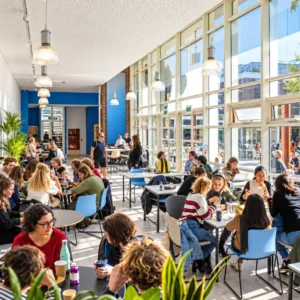
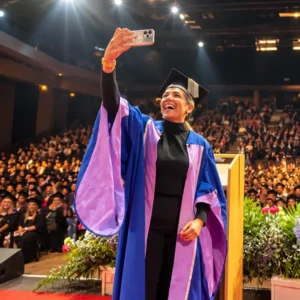
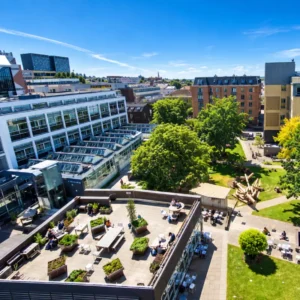
University of Brighton Gallery

Frequently Asked Questions
It can be a strong option depending on your course and priorities. Brighton offers international scholarships, accommodation options, careers support and opportunities for practical learning. The city itself is also a major part of the experience, particularly for students who would prefer a coastal location rather than a more traditional university town.
Brighton is particularly associated with practical and career-related learning across a broad range of subjects. Its academic portfolio includes business, engineering, computing, health sciences, education, architecture, art and media, law and social sciences. Some areas, including education and nursing, have also recorded strong recent subject or graduate outcomes.
The University of Brighton does not publish one official institution-wide acceptance rate that should be treated as the definitive probability of admission. Online figures from unofficial sources can therefore be misleading. It is more useful to check whether your academic profile meets the requirements of the particular course.
Yes. Brighton publishes specific admission guidance for applicants from India. Standard undergraduate entry generally requires around 60–65% in Class XII, while postgraduate applicants would normally need a recognised bachelor’s degree with around 55% or above, subject to individual course requirements.
There is no single deadline covering every course. Dates depend on the programme, intake and application route. International applicants are encouraged to apply early, especially when they also need time for an English test, tuition deposit, CAS and Student visa.
Based on the university’s published budgeting figures, university halls have started at around £169 per week for a shared-bathroom room and around £184 per week for an ensuite room. Prices depend on the residence, room type and academic year.
Yes. University accommodation is available, and eligible new international students may receive a first-year accommodation guarantee when they accept their offer and complete the accommodation process by the applicable deadline.
A CAS is issued once the university’s relevant requirements have been met. Depending on your circumstances, this can include satisfying offer conditions, completing requested checks and paying the required tuition deposit. You need the CAS before making your UK Student visa application.
Not for every course. Certain programmes may include an interview or another selection stage, while many do not. Check the admission information for your particular programme after applying.
Possibly. IELTS is one way to demonstrate English proficiency, but Brighton recognises other approved English-language qualifications as well. What matters is whether you satisfy the English requirement for your chosen course through an accepted route.
The exact list depends on your course and study level. Applicants generally need relevant academic certificates and transcripts along with evidence of English-language proficiency. Depending on the programme, you may also be asked for additional documents or materials such as a portfolio, research proposal or other supporting evidence.
Because requirements differ between courses, it is better to build your document checklist from the programme you are actually applying for rather than relying on a generic university application list.
You Should Also Check