Australia’s Universities Seek Lower Housing and Travel Costs Amid 40% Rise in Student Rents
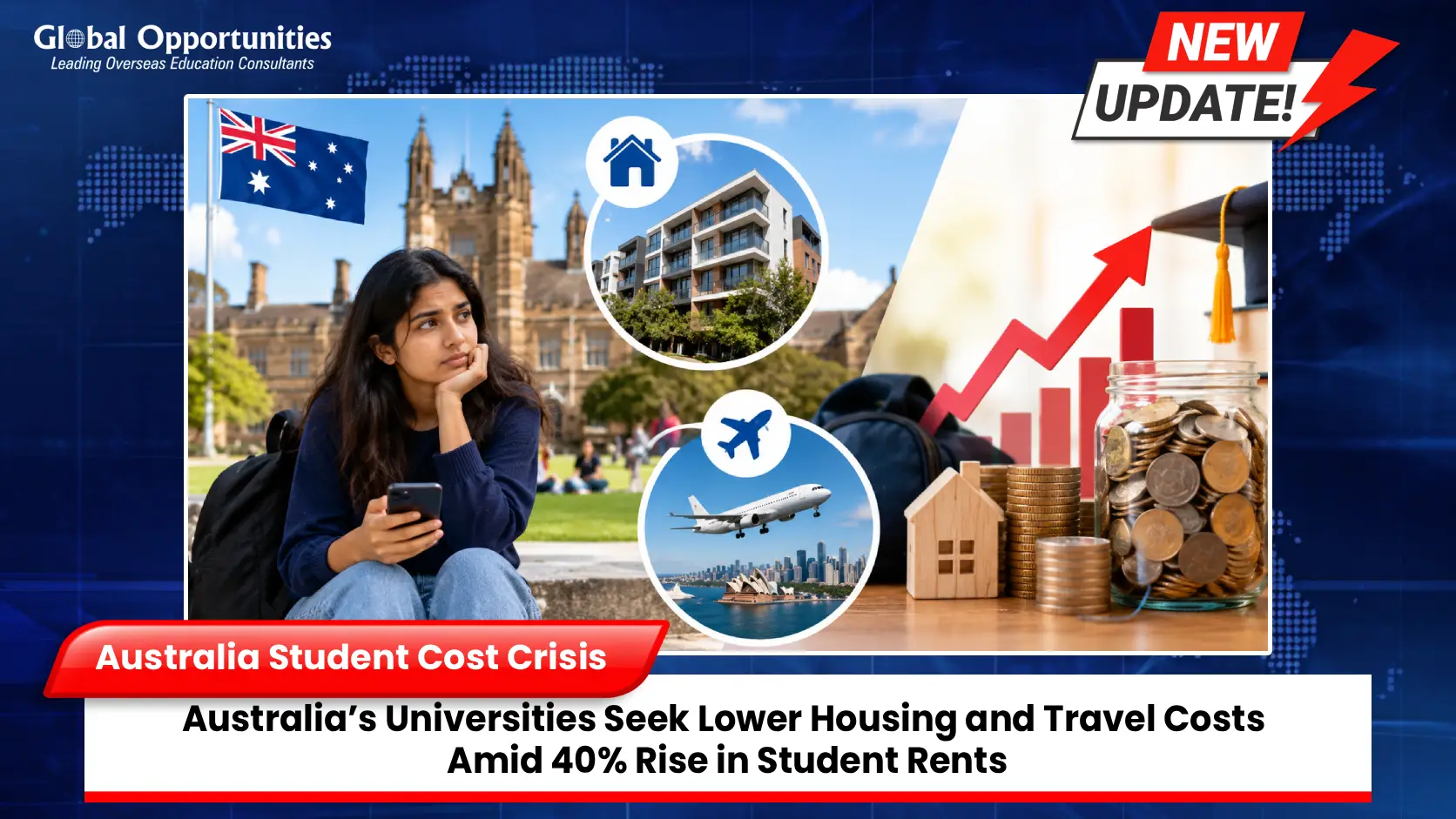
The higher education sector in Australia is reeling from unprecedented financial problems as increasing living costs are affecting both local and foreign students. Thus, in a bid to address the growing affordability crisis, Universities Australia, the peak body for the 38 leading universities in Australia, including such prestigious universities as the University of Sydney and the University of Melbourne, has urged the government to provide significant concessions on transport and housing, as well as other utility expenses.
The appeal follows concerning statistics that indicate that the basic cost of living for students has increased more than the general inflation over the past five years. Since 2021, student rents in a number of university cities have increased by around 40%, making housing impossible for many students. During the same period, food prices have risen by 27%, utility bills by 39%, and the price of gas by 43%.
Overall, the expense incurred in maintaining minimum living standards for students in Australia has increased by 29% since 2021, which is much higher than the national inflation rate of 24%. However, average expenditure of students has gone up only by 21%, indicating that students are having to stop using necessities and have a lower standard of living than five years ago.
Proposed Relief Measures
In order to reduce these financial challenges, Universities Australia has proposed systemic governmental support. The association has called for the issue of concession cards for any Australian students enrolled in universities all the while they study. The cards would provide opportunities to save on important public transportation costs, medicine purchases, and utility bills.
The highest representative body has requested that both state and federal governments provide the same transport concession fare for international students in all the states and territories of Australia. Currently, the different regions of Australia have differing policies regarding international student public transport concessions, which cause many international students to pay the full fare for trains and buses while domestic students benefit from transport concessions and pay lower fares.
The chief executive officer of Universities Australia, Luke Sheehy, noted that the accessibility of higher education depends heavily on the cost of living in general. He added that a student studying abroad in Australia should not mean that they are unable to take care of everyday expenses, such as public transport, as the accessibility of higher education relies on affordable public transport for students.

Impact on Indian Students and Strategic Implications
The push for financial concessions is especially important for Indian students, as they represent one of the largest groups of international students in Australia. According to statistics from India’s Ministry of External Affairs, there were 138,579 Indian students studying in Australian universities/higher education as of the beginning of 2025, with the total number of Indian students exceeding 196,000 when Indian school students are included.
The discussion over living expenses is happening at a time when regulatory agencies are placing a greater focus on international activities and immigration policies are changing. Australia has recently changed student visa requirements for applicants from India. Henceforth, Indian applicants will be moved from Evidence Level 2 to Evidence Level 3. This means that applicants’ financial capacity will be tightened, and they will need to provide more documentation when applying for a student visa.
Experts are saying that while everything proposed concerning transport and utilities will make a significant difference in daily expenses for students, the actual tuition fees are not going to change, nor do those changes lower the financial capacity limits established for obtaining visas. Consequently, total living costs (including rent, food, transport, and job returns) have become one of the key factors for making decisions on studying in Australia versus Canada, the UK, Europe, etc.
Broad Education Goals and Long-Term Vision
Universities Australia’s actions are also consistent with recommendations provided in the Australian Universities Accord, which has set a challenging national goal of achieving a bachelor’s degree or higher for 55% of Australians aged between 25 and 34 by the year 2050. The university association insists that maximum higher-education attainment should not only be ensured through student enrollment in universities but also through support services aimed at making sure housing, public transport, and essential healthcare do not become too costly during their studies.