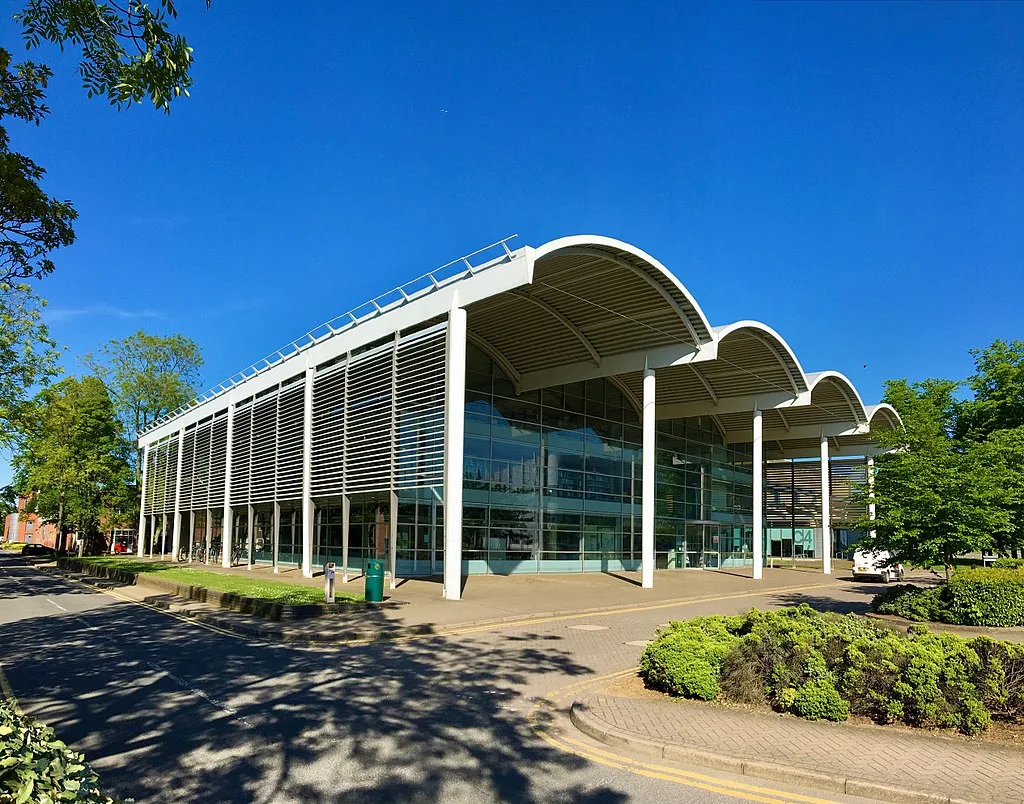
About Cranfield University
Cranfield University Ranking
5th - UK
QS World University Rankings by Subject 2026 – Mechanical, Aeronautical & Manufacturing Engineering
20th - UK
QS World University Rankings by Subject 2026 – Business & Management Studies
20th - UK
QS World University Rankings by Subject 2026 – Environmental Sciences
54th - UK
CWUR 2026 – Overall
8th - UK
CWUR 2026 – Employability
5th - UK
Financial Times European Business School Rankings 2025
55th - Global
QS World University Rankings by Subject 2026 – Mechanical, Aeronautical & Manufacturing Engineering
140th - Global
QS World University Rankings by Subject 2026 – Business & Management Studies
140th - Global
QS World University Rankings by Subject 2026 – Environmental Sciences
200th - Global
QS World University Rankings by Subject 2026 – Engineering & Technology
193rd - Global
QS Sustainability Rankings 2026
5% - Global
CWUR 2026 – Overall
300th - Global
CWUR 2026 – Employability
29th - Europe
Financial Times European Business School Rankings 2025
Cranfield University Courses for Indian Students
Postgraduate Courses
Course choice at Cranfield is really a choice between two very different worlds under one roof: the engineering and applied-science side, built around the university’s own aircraft, labs, and test facilities, and the management side, built around the triple-accredited Business School. Both draw serious interest from Indian applicants, for different reasons.| Course | Qualification | Duration |
| Aerospace Manufacturing | MSc | 1 year |
| Aerospace Propulsion | MSc | 1 year |
| Aerosystems | MSc | 1 year |
| Computational Fluid Dynamics | MSc | 1 year |
| Cyber Defence and Information Assurance | MSc | 1 year |
| Cyberspace Operations | MSc | 1 year |
| Data Science and Artificial Intelligence for Sustainability | MSc | 1 year |
| Defence Simulation and Modelling | MSc | 1 year |
| Environmental Engineering | MSc | 1 year |
| Environmental Management for Business | MSc | 1 year |
| Explosives Ordnance Engineering | MSc | 1 year |
| Finance | MSc | 1 year |
| Future Food Sustainability | MSc | 1 year |
| Guided Weapons Systems | MSc | 1 year |
| Information Capability Management | MSc | 1 year |
| Logistics and Supply Chain Management | MSc | 1 year |
| Management | MSc | 12 months |
| MBA (Master of Business Administration) | MBA | 1 year |
| Military Aerospace and Airworthiness | MSc | 1 year* |
| Military Electronic Systems Engineering | MSc | 1 year* |
| Procurement and Supply Chain Management | MSc | 1 year |
| Renewable Energy | MSc | 1 year |
| Robotics | MSc | 1 year |
| Safety and Human Factors in Aviation | MSc | 1 year |
| Strategic Marketing | MSc | 1 year |
| Systems Engineering | MSc | 1 year |
| Thermal Power and Propulsion | MSc | 1 year |
| Virtual Prototyping for Vehicle Structures | MSc | 1 year |
| Water and Wastewater Processes | MSc | 1 year |
| Welding Engineering | MSc | 1 year |
Cranfield University Fees for Indian Students
| Course Type | Annual Fee (GBP) | Approximate INR* |
| MSc (most engineering and applied science courses) | £18,000 – £35,950 | ₹21 lakh – ₹42 lakh |
| MSc (Business and Management, School of Management) | £29,025 – £29,650 | ₹34 lakh – ₹34.7 lakh |
| MBA — The Transformation MBA | £49,500 | ₹57.9 lakh |
| Doctoral (PhD/EngD) | £24,000 – £33,000 | ₹28.1 lakh – ₹38.6 lakh |
Cranfield University Cost of Living
| Expense | Estimated Monthly Cost |
| Accommodation | £620–£1,400 |
| Food | £300–£400 |
| Travel | £39–£85 |
| General expenses | £300–£400 |
| Total | £1,259–£2,285 |

Cranfield University Scholarships for Indian Students
- Opportunities to participate in student clubs, societies, sports and social activities, helping students build connections beyond the classroom.
- You get instead a tight-knit, professionally-minded community where most students are postgraduates already carrying real work experience.
- The campus itself is built around research facilities. They have a working airport, an FIA-approved crash-test centre used for Formula One testing, and a purpose-built agricultural research glasshouse among them.
- Cranfield’s Students’ Association runs social events and clubs adapted to this older, more international, more professionally-focused population rather than a typical undergraduate freshers’ scene, and the village setting means much of student life happens on or immediately around campus rather than spreading into a city’s nightlife.
- For Indian students specifically, the university’s international alumni communities, including an active India-based network among more than 80,000 alumni across 170+ countries, offer a genuine post-graduation connection point once you’re back home or working globally.
Cranfield University Eligibility & Admission Requirements
Master’s Degree
- A bachelor’s degree with UK 2:1 honours or equivalent (broadly 60%+, though this varies by course and by your specific Indian university).
- Relevant subject background for technical MSc courses - engineering-focused programmes generally expect a related engineering or science degree.
- IELTS 6.5 overall (minimum 6.0 in each component) for most courses, though some technical programmes accept 6.0 overall.
- A statement of purpose, transcripts, and references; GMAT or GRE optional for most MSc courses, though a competitive GMAT score (600+) strengthens an application where submitted.
Cranfield University English Proficiency requirements
International students must demonstrate English proficiency to study at Cranfield University:- Most MSc courses: IELTS 6.5 overall, with a minimum of 6.0 in each component
- Some technical and engineering-focused courses: IELTS 6.0 overall accepted, depending on the specific programme.
- GMAT or GRE is optional for most MSc applications, though a strong score can support a borderline application; the MBA weighs a GMAT score (where submitted) alongside professional experience rather than in place of it.
- Applicants who fall short of the required score should check directly with Cranfield’s admissions team about pre-sessional options, since these aren’t structured the same way across every course.
How to Apply to Cranfield University from India
- Confirm your specific course, its current fee, and its intake. Cranfield’s course-by-course fee variation is wide enough that assuming a “typical” figure is risky.
- Apply directly through Cranfield’s own online application system; there’s no UCAS route, since Cranfield doesn’t admit undergraduates.
- Submit transcripts, a personal statement or SOP, references, and English test evidence with your application.
- For the MBA, prepare your CV and be ready to speak to your professional experience in depth. This is assessed as closely as your academic background.
- If you’re applying for a scholarship, check whether it requires a separate application (like the India Scholarship) or is assessed automatically once you hold an offer (like the Merit Scholarship); the two processes run on different timelines.
- Pay your deposit once your offer is confirmed, and receive your CAS.
- Apply for your Student visa, then arrange accommodation; most students live in Cranfield’s own on-campus housing or nearby villages, since the campus itself sits outside a major city.
Cranfield University Intakes
| Intake | Key Information |
| January | Limited course availability, including Finance MSc for January 2027. Check programme-specific availability. |
| September | Main intake with the widest MSc/MBA choice and scholarship opportunities. Deadlines generally fall around August, with some earlier closures. |
UK Student Visa
- Cranfield issues your CAS once your deposit is paid and offer conditions are met for most self-funded taught master’s courses; this deposit is a prerequisite, not an optional early payment.
- You’ll need to evidence your remaining tuition liability plus maintenance funds under standard UK Student visa rules currently require a cost of £1,171 per month for those living outside London, including Cranfield’s rural location. The Bedfordshire location qualifies for this lower rate, held for 28 consecutive days.
- Standard visa processing runs around three weeks from biometrics submission.
- International students can work up to 20 hours a week during term time and full-time during official holidays, under standard student visa conditions.
- Because Cranfield’s programmes are often exactly 12 months, plan your visa timeline tightly around your specific course dates rather than assuming the flexibility that a longer degree might allow.
- UKVI financial thresholds are reviewed periodically to confirm the current figure on GOV.UK, particularly given the rise scheduled for 30 November 2026.
Career Opportunities & Placements
| Job Role | Average UK Salary | Approx. Salary in INR |
| Aerospace Engineer | £55,000 | ₹71.0 lakh |
| Mechanical Engineer | £44,000 | ₹56.8 lakh |
| Electrical Engineer | £47,000 | ₹60.6 lakh |
| Manufacturing Engineer | £42,000 | ₹54.2 lakh |
| Chemical Engineer | £50,000 | ₹64.5 lakh |
| Nuclear Engineer | £58,000 | ₹74.8 lakh |
| Data Scientist | £75,000 | ₹96.8 lakh |
| Data Engineer | £65,000 | ₹83.9 lakh |
| Data Analyst | £55,000 | ₹71.0 lakh |
| Business Analyst | £56,000 | ₹72.2 lakh |
| IT Project Manager | £61,000 | ₹78.7 lakh |
| Programme Manager | £87,000 | ₹1.12 crore |
| Supply Chain Manager | £50,000 | ₹64.5 lakh |
| Project Manager | £65,000 | ₹83.9 lakh |
| Systems Engineer | £56,000 | ₹72.2 lakh |
| Infrastructure Manager | £71,000 | ₹91.6 lakh |
| Network Architect | £81,600 | ₹1.05 crore |
| Quality Manager | £50,000–£70,000 | ₹64.5–₹90.3 lakh |
| Operations Manager | £50,000–£70,000 | ₹64.5–₹90.3 lakh |
| Procurement Manager | £45,000–£65,000 | ₹58.1–₹83.9 lakh |
Why Study at Cranfield University?
When it comes to discussing the merits of Cranfield University, one should be prepared to know about the specific dichotomy instead of generic speciality:- Cranfield as a university is dedicated to postgraduate education, with programmes focused on aerospace, engineering, technology, management and related fields.
- A university that owns and runs its own airport, holds triple accreditation shared by only 1% of business schools worldwide, and has been independently ranked 1st in the UK for MBA salary increase not a marketing claim, but a ranking result.
- Add a dedicated £10,000 scholarship pool built specifically for Indian applicants, an alumni network with real seniority in global industry, and a research culture where 88% of output is rated world-leading or internationally excellent, and the case for Cranfield becomes less about brand recognition and more about a specific bet: that specialist depth in aerospace, engineering, or management, taught by faculty still active in industry, outperforms a broader degree from a bigger-name university.
- Benefit from Cranfield’s long-standing focus on aerospace and aviation, with specialist facilities and research capabilities.
Why Choose Global Opportunities to Study at Cranfield University?
Global Opportunities helps students understand study abroad requirements, identify relevant funding opportunities and navigate the application process with up-to-date information:- Global Opportunities helps students make informed decisions when applying to Cranfield University by assessing whether their academic background and work experience align with their chosen MSc or MBA programme.
- We also help applicants identify relevant India-specific scholarships and understand important deadlines, while keeping them updated on university developments that may affect future intakes.
- From course selection to application guidance, our support helps students approach their Cranfield application with accurate and up-to-date information.
Similar Universities in the UK
| University of Bradford | London South Bank University | Leeds Beckett University |
| Cardiff Metropolitan University UWIC | Heriot-Watt University | University of East London |
| Cranfield University | Newcastle University | University of Lincoln |
| University of Exeter | Oxford Brookes University | University of Plymouth |
| Istituto Marangoni | Middlesex University | University of Reading |
| Keele University | Queen's University Belfast | University of Roehampton |
| Kingston University | Robert Gordon University (RGU) | University of South Wales |
| Cranfield University | Teesside University | University of Chester |
| University of Bolton | University of Sussex |
Top Countries to Study Abroad for Indian Students
Related Articles
Cranfield University Gallery



Frequently Asked Questions
You Should Also Check